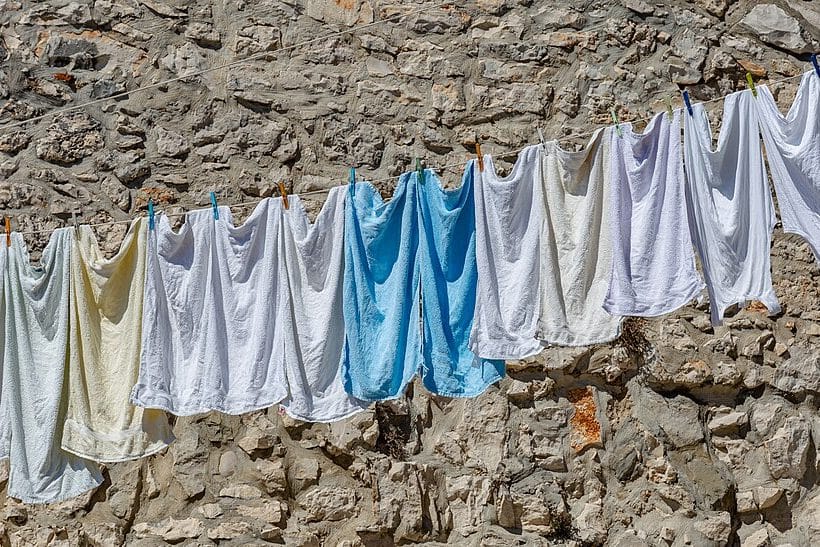
My neighbor Carla strung a clothesline across her backyard in June, between a maple and a fence post, using the same kind of galvanized wire her mother used in Ohio forty years ago. Her husband thought it was a little embarrassing — visible laundry, right there for the whole block to see. Three months and one electric bill later, he was the one buying a second line for the side yard. That's the clothesline comeback in one household: it starts as a nostalgia project and ends as a line item that actually moves the needle on a summer power bill.
The Math Behind an Electric Dryer's Summer Bill
A standard electric clothes dryer draws somewhere between 2 and 4 kilowatt-hours per cycle, depending on load size, moisture level, and how old the unit is. At the current U.S. average residential rate of roughly 17 cents per kilowatt-hour, that puts a single load at 35 to 70 cents — and a household running five or six loads a week is looking at $10 to $18 a month just for the drying step, not the washing. Run the numbers across a full summer of extra laundry — sweaty gym clothes, pool towels, sheets changed more often in the heat — and the dryer alone can add $60 to $100 to a three-month electric bill. Line-drying cuts that portion to zero.
The efficiency gap gets worse in July and August for a reason most people don't think about: a running dryer dumps heat and humidity into the house, which then makes the air conditioner work harder to pull that same heat back out. Energy Star has flagged this same effect for years in its guidance on summer appliance use, recommending dryer loads be run in the early morning or late evening specifically to avoid layering dryer heat on top of peak AC demand. Skip the dryer entirely on a hot afternoon and that recommendation becomes moot — there's no heat load to schedule around in the first place. A clothesline sidesteps the whole problem — no added heat, no added humidity, and the sun does something a dryer's tumble cycle can't: it bleaches and disinfects through UV exposure, which is why hospitals and cloth-diaper services relied on sun-drying long before anyone marketed it as a lifestyle trend. Add up the avoided dryer heat and the avoided extra AC runtime together, and the real summer savings run higher than the electric bill for the dryer cycle alone suggests. It's a small physics detail that most energy-saving articles skip entirely.
What "Right to Dry" Laws Actually Protect
If you live under an HOA or a condo association, don't assume a clothesline is automatically off-limits. Nine states — Florida, Colorado, Utah, Maine, Vermont, Hawaii, Arkansas, and a handful of others — have passed so-called "right to dry" statutes that limit how far an HOA can restrict outdoor drying, usually by requiring that the association allow at least some form of clothesline or drying rack even if it can regulate placement and visibility. Florida's law, for instance, protects a resident's ability to install a clothesline in a backyard that isn't visible from the street or a neighboring property, which is exactly the kind of compromise most HOAs will accept without a fight.
Check your state and your association's covenants before you install anything permanent. A quick email to the HOA board referencing the specific statute tends to resolve this faster than showing up at an annual meeting with a petition — boards deal with liability questions, not ideology, and a cited law removes the ambiguity they're actually worried about.
Small-Space and Apartment Solutions
Renters and apartment dwellers without a yard aren't left out of this. A retractable line — the kind that mounts to two opposite walls or posts and reels in when not needed, sold under names like Superline or the Whitmor Easy Clip — takes up almost no permanent space and holds a full load. An accordion-style wooden or aluminum rack, the type IKEA sells as the MULIG or that shows up at Target and Bed Bath & Beyond under a dozen private labels, folds flat against a wall between uses and fits on a balcony, in a laundry closet, or even over a bathtub on a rainy day.
- Over-the-door racks hang on a standard interior door and handle a few shirts or a couple of towels without any floor footprint at all.
- Tension rods mounted inside a shower stall work as an improvised line for smaller items, and they cost less than ten dollars at any hardware store.
- A simple wall-mounted retractable line in a laundry closet is probably the single best upgrade for anyone doing this long-term — install it once and it disappears when you're not using it.
Balconies are trickier because a lot of leases specifically prohibit visible laundry, largely for the same aesthetic reasons some HOAs cite. The workaround most renters land on is a slim, freestanding rack positioned just inside the sliding door, angled to catch airflow without being visible from the street — it dries almost as fast as an exposed outdoor line on a low-humidity day and keeps the lease technically intact.
Getting the Technique Right
Line-drying done badly produces the stiff, cardboard-like towels that turned a lot of people off the idea in the first place — and that's a fair complaint, not a myth. The stiffness comes from mineral deposits in tap water settling into the fabric as it dries in open air, something a tumble dryer's mechanical action normally breaks up on its own. A half-cup of white vinegar in the rinse cycle solves most of it by preventing those deposits from binding to the fibers, and giving towels a hard shake before hanging them fluffs the loops enough to avoid the worst of the roughness. Hanging heavier items like towels and jeans by the waistband or a folded edge, rather than by one corner, also keeps them from stretching out of shape as they dry.
Wind matters more than direct sun for speed. A breezy, overcast 65-degree day will often dry a load of T-shirts faster than a still, humid 90-degree afternoon, because moving air pulls moisture away from fabric far more efficiently than heat alone. Space items with an inch or two of gap between them rather than crowding the line — it looks less efficient, but a crowded line traps humid air between garments and can actually take longer to finish than a properly spaced one.
Dark colors and anything with printed graphics should go on the line in shade or turned inside out, since direct UV exposure that bleaches whites will fade a black T-shirt or a screen-printed logo within a season of regular use. This is the one real trade-off of sun-drying, and it's worth being upfront about: the same UV action that whitens sheets is hard on saturated color and ink.
Fabric Longevity Nobody Mentions in the Energy-Savings Pitch
The energy-bill argument gets most of the attention, but the case for line-drying holds up just as well on fabric life alone. A standard dryer cycle works by tumbling clothes against a heated metal drum for 30 to 50 minutes, and that repeated mechanical friction — combined with heat that can run past 130 degrees Fahrenheit on a high setting — is exactly what breaks down elastic fibers, fades print designs, and produces the lint that collects in the trap after every load. That lint isn't just dust. It's your clothing, physically eroding a little more with every cycle. Air-drying skips the friction and the heat entirely, which is the reason garment care labels for anything with spandex, delicate elastic, or printed graphics almost always recommend it over machine drying. Favorite band T-shirt, a swimsuit with real elastic memory, a linen shirt that's supposed to stay slightly rumpled rather than stiff — those are exactly the pieces that show dryer wear first, and exactly the pieces worth hanging on principle even if everything else still goes through the machine.
None of this means the dryer should disappear from the laundry room. Heavy bath towels and bedsheets, in particular, come out of the dryer noticeably softer than off a line, and in a genuinely humid climate — coastal Florida or the Gulf Coast in August, where outdoor humidity regularly sits above 80 percent — a line-dried load can take most of a day to finish and may not get fully dry at all. The realistic approach most line-drying households settle into is a hybrid one: everyday clothes and lighter items go outside or on a rack, while towels, sheets, and anything needed same-day still go through the dryer on a low-heat setting to finish the job.
Where to Start This Week
Pick one load — towels, gym clothes, whatever's already in the hamper — and hang it instead of running it through the dryer. A basic retractable line runs $15 to $25 at any hardware store, and a folding rack costs about the same. Track that one dryer cycle you skipped against your next bill, and the case for keeping the habit tends to make itself.