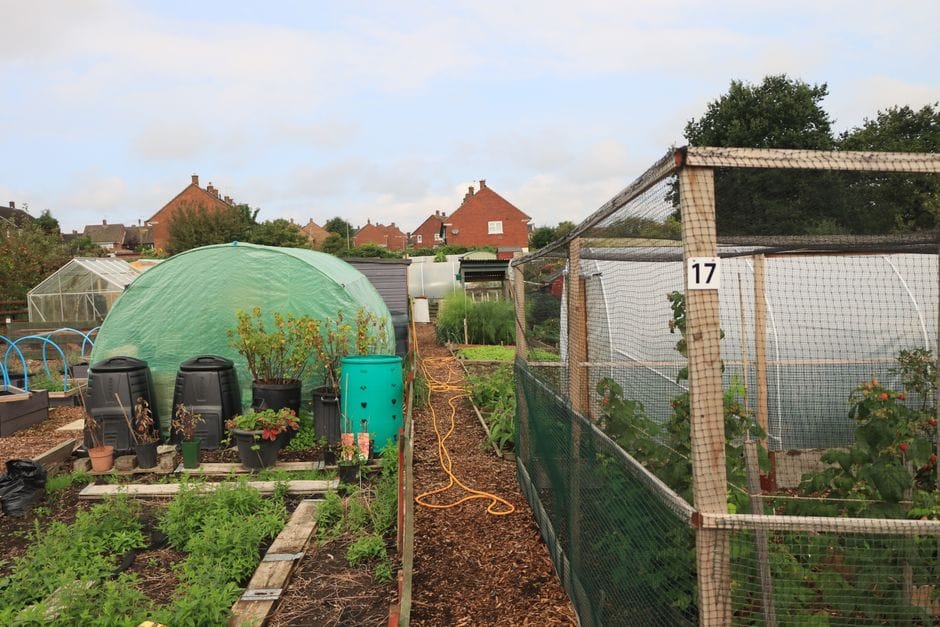
About a third of what the average household throws away is food scraps and yard trimmings. Sent to a landfill, that material breaks down without oxygen and releases methane. Composted in your backyard, the same scraps turn into free soil for your garden. The setup is simpler than most people expect.
The Greens and Browns Rule
A healthy compost pile needs two ingredients in rough balance. Greens are wet and nitrogen-rich. Browns are dry and carbon-rich. Aim for about one part greens to two or three parts browns by volume, and the pile mostly takes care of itself.
- Greens: fruit and vegetable scraps, coffee grounds, tea bags, fresh grass clippings.
- Browns: dry leaves, shredded cardboard, paper towel rolls, sawdust from untreated wood.
What to Keep Out
A few things cause more trouble than they are worth. Skip meat, fish, dairy, and oily food, which attract animals and turn rancid. Leave out pet waste and anything labeled compostable but designed for industrial facilities, since a backyard pile never gets hot enough to break it down.
Keeping It From Smelling
A compost pile should smell like damp earth, not garbage. If it stinks, it is usually too wet or too heavy on greens. Mix in more browns and turn the pile with a fork to add air. If it is bone dry and nothing is happening, sprinkle some water until it feels like a wrung-out sponge.
No Yard? No Problem
An apartment works too. A small countertop bin with a charcoal filter holds scraps until you can drop them at a community garden or a curbside collection program. A sealed container in the freezer also keeps things odor-free between trips.
Give it two to six months and the bottom of the pile turns into dark, crumbly compost you can spread on garden beds or houseplants. You spend almost nothing, your trash shrinks, and your plants get a real boost.