The bucket under the kitchen sink
Every evening, the same small ritual happens in a lot of kitchens. The pot that held the pasta water gets set aside to cool, the vegetables get rinsed in a colander over the sink, and the dishwater from a quick hand-wash sits in the basin before it goes down the drain. Nobody thinks of that water as a resource. It is simply the stuff you need to get rid of. Yet some of it, used carefully, can water a bed of kale or a row of tomatoes just as well as tap water, and it saves you the trip to the hose. The catch is that not all kitchen water is equal, and a few habits decide whether it helps your garden or quietly damages the soil it touches.
Greywater is the general name for household wastewater that did not come from a toilet. Laundry water, bath and shower water and sink water all fall under it, although kitchen water is the trickiest because it carries grease, food particles and whatever you used to clean the pan. The rules for reusing greywater differ between states and between cities, and some places require a permit for anything beyond a bucket. Check your local rules before you install a diverter or plumb anything into the garden. For a simple bucket and a watering can, most homeowners are fine, but the local answer is the one that counts.
What is safe to pour on the garden
Start with the cleanest sources. Water from rinsing lettuce, potatoes or carrots is a good example: it carries soil and a little starch, and plants love both. Water you have boiled and let cool, from pasta or eggs, is similarly safe as long as there is no salt-heavy sauce in it. Mild dishwater from washing fruit and vegetables or plates with a plain dish soap is fine in small amounts. Do not confuse "biodegradable" with "garden safe", because a soap can break down perfectly well and still leave salts and surfactants behind in the soil.
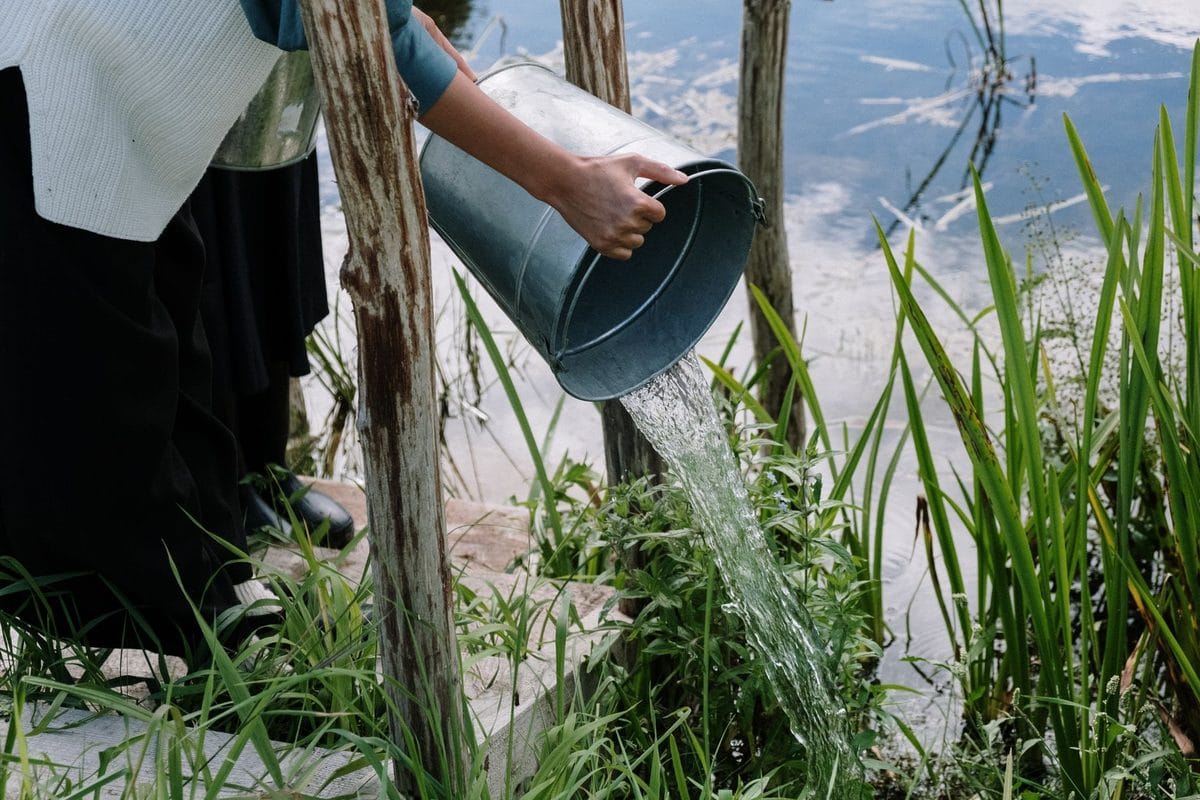
Use the water on plants that tolerate it, and water the soil rather than the leaves. Pour it into a shallow basin around the base of a shrub, a fruit tree or a row of squash, and let it soak in. Do not store it for more than a day, because it turns quickly in warm weather and starts to smell. Mulch over the basin afterwards, which keeps the surface from crusting and gives the soil biology something to work with.
What should never go on the soil
Be ruthless about a few things. Water from cooking meat, fish or poultry carries fats and bacteria that you do not want near vegetables you plan to eat raw. Bleach, drain cleaner, oven spray and degreasers should never go on the garden, because they kill the microbes that make soil work and can burn roots on contact. Water that held raw meat juices, or the cloudy rinse from a greasy roasting tray, belongs down the drain. Do not water root vegetables with greywater that contains soap-heavy residue, and avoid pouring anything onto bare soil in a heavy rain, when it runs off towards the street.
Salt is the sneaky one. Many products labelled natural or plant-based still contain sodium compounds, and sodium builds up in clay soil over a season. Plants show it as leaf edges turning brown and growth slowing for no obvious reason. If you use a lot of greywater on the same patch, flush it with clean rainwater now and then, and watch for crusty white deposits on the surface.
Skip the fancy kit until you have run a bucket
Here is the opinion that will save you money. Do not buy a commercial diverter system before you have spent a month doing it by hand. Put a clean bucket by the sink, catch the water you would have poured away anyway, and use it on two or three beds. You will quickly learn which of your habits produce good water and which produce the oily film that clogs a watering can. You will also learn how much water a typical week actually makes, which is almost always less than people expect.
The bucket also shows you where the real savings are. Most of the water a household uses in a day is not in the kitchen at all, and a diverter that only handles sink water can be a poor return on the plumbing cost. A fair test is whether you find yourself filling the bucket every night without thinking about it. If you do, a larger system may pay off. If you forget after a week, you have saved the price of the kit.
The garden test that tells you more than a label
Watch the plants more than the bottle. Lettuce, peppers and most annual vegetables respond well to gentle, regular watering, and you will see it in the leaf colour within a few weeks. Fruit trees and perennial shrubs handle occasional greywater well, but they dislike a constant salty drip in the same spot. Take a photo of the bed at the start and again after a season, and compare it honestly. That habit beats any marketing claim on the bottle.
There is also a larger question worth asking. Greywater is one of the few water-saving habits that makes the garden more productive without asking you to change anything about how you live. You are already filling the bucket, so the only real decision is where it goes. Put it on the soil you want to feed, keep the meat and bleach away from it, and the water that would have gone down the drain ends up growing something you can eat.
Start tonight with the water from the next pan of pasta, and see whether the tomatoes notice.