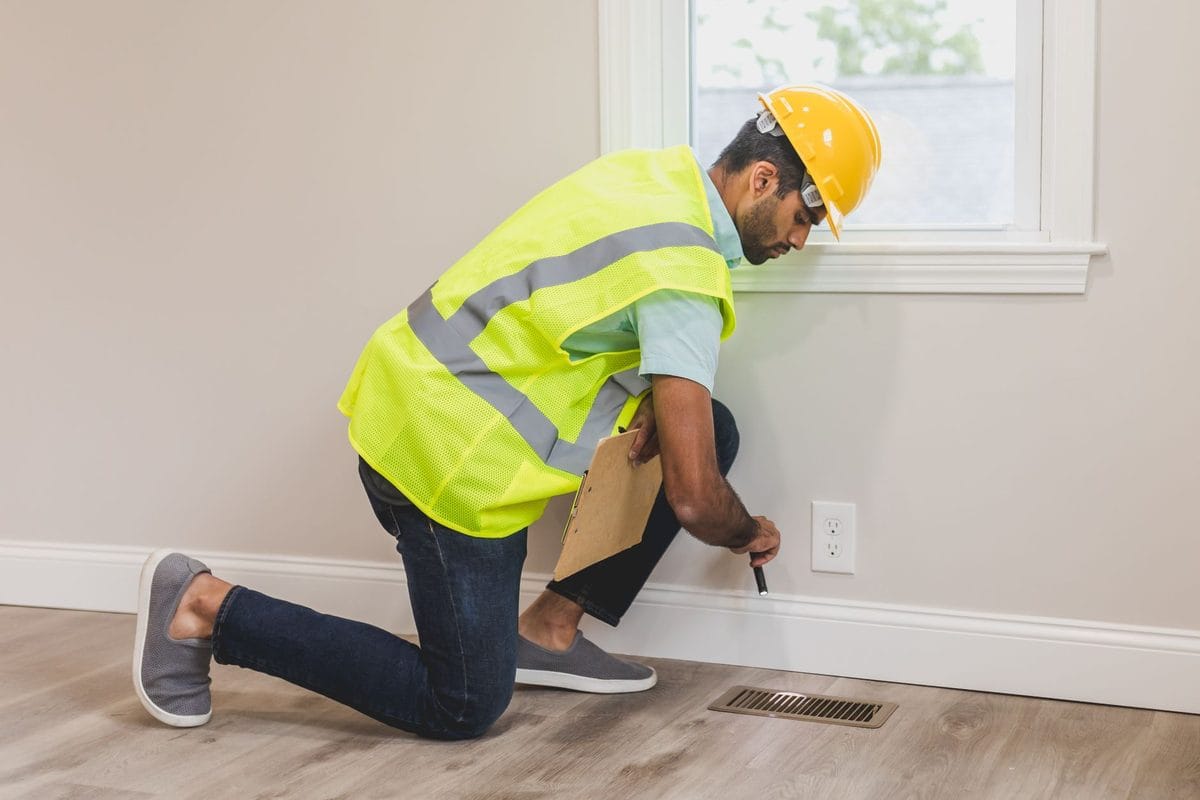
Heating oil is forecast to cost the average household that burns it about $2,115 this winter, a 21 percent jump from last year, according to the U.S. Energy Information Administration's Winter Fuels Outlook, released on October 6. The same report expects homes heating with natural gas to spend about 9 percent less than last winter and homes heating with electricity to spend about 4 percent more, which means the bill you open in January depends on a fuel you did not pick this year and cannot bargain over. What you can still change is how much of that fuel your house needs. A leaky attic hatch, an uninsulated rim joist, or a duct run that dumps warm air into a crawl space costs you the same in a forecast-friendly winter as in a bad one. Fall is the best time to find those leaks, because the repairs can still be done in weather that cooperates. The tool for finding them is not a gadget from the hardware store; it is a home energy assessment, and the order in which you do it matters more than most people realize.
What the Forecast Says, Fuel by Fuel
EIA's figures are national averages for the heating season, November through March, and they apply to a household's main heating fuel, which in many homes also runs the water heater and the stove. Treat them as a guide to the direction of your bill, not as a quote for your house.
| Main heating fuel | Forecast average spending, November-March | Change from last winter |
|---|---|---|
| Natural gas | about $640 | down 9% |
| Electricity | about $1,196 | up 4% |
| Propane | about $1,246 | down 3% |
| Heating oil | about $2,115 | up 21% |
Oil is where the pain concentrates. Homes that heat with it make up roughly 3 percent of U.S. households, mostly in the Northeast, and EIA expects them to pay an average of $5.26 a gallon this season, up 34 percent, even though a warmer Northeast should trim the gallons they burn by about 9 percent. EIA also cautions against using these dollar figures to compare one fuel with another, because the households that use each fuel differ in size, age, and climate, so the table is not an argument for ripping out your furnace. It does carry a regional warning: the West is the exception to the good news on gas and electricity, with spending forecast up 7 percent for gas homes and 9 percent for electric homes because EIA expects a much colder winter there than last year's unusually warm one.
Book the Assessment Before You Buy Anything
Do the assessment before you buy a thermostat, a window, or a furnace.
The Department of Energy calls a home energy assessment "the essential first step to lowering your energy bills" in its consumer guide, and the logic is plain once you picture the alternative. A house behaves like one system, so a set of new windows can do very little for a home whose real losses are in an unsealed attic and a leaky duct run, and the only way to learn which house you own is to measure it. ENERGY STAR says sealing air leaks and adding insulation can provide up to 10 percent savings on annual energy bills, and in most houses those two jobs cost less than replacing windows or a furnace. Guessing is the expensive route. Get the numbers first, then spend.
The second reason is paperwork, and it catches people every year. Many incentive programs require the assessment to come first and refuse to pay for work that started before it. Delaware's Home Performance with ENERGY STAR program calls the assessment mandatory before any work if you want incentives; the standard co-pay is $50 (up to $100 for homes over 3,000 square feet, $25 for income-qualified customers), and with your permission the advisor installs up to $250 worth of LED bulbs, faucet aerators, efficient-flow showerheads, and water heater pipe insulation during the visit at no extra charge. West Virginia, which opened two state rebate programs statewide on September 28, tells applicants to finish the application, assessment, and approval steps before work begins and says projects completed before approval cannot receive rebates, as local reporting on the launch lays out. If a contractor offers to "get started this week" before anyone has checked a program's rules, say no.
What the assessment will not earn you this year is a federal tax credit. The IRS lists a credit of up to $150 for a qualifying home energy audit under the Energy Efficient Home Improvement Credit, but the credit covers improvements made through December 31, 2025, because the budget law signed in July 2025 ended it early. The money that remains sits with states and utilities, and the rules are moving. On May 29 the Department of Energy issued new guidance for the state-run HOMES and High-Efficiency Electric Home Rebate programs; for the appliance rebates it ends payments for replacing gas equipment with electric equipment and allows only electric-to-electric upgrades, according to Utility Dive, and each state is rolling out its version on its own schedule. Before you plan a project around a rebate you saw advertised, confirm with your state energy office or your utility that it exists for your address today.
What a Professional Assessment Actually Does
A professional visit is equipment-based, and that is what separates it from a walk around the house with a flashlight. ENERGY STAR describes the assessment in its Home Performance program as five parts:
- A conversation about the rooms that never get comfortable and how your household really uses the house.
- A review of past energy bills, which becomes the baseline for any savings estimate.
- A visual inspection of the exterior, the envelope, and every mechanical system.
- Diagnostic testing for leaks, moisture, and ventilation problems, plus safety checks.
- A prioritized list of improvements, with health and safety issues first, then comfort, then cost-benefit.
The centerpiece is usually a blower door: a powerful fan mounted in a flexible panel that fits an exterior doorway and pulls air out of the house, so outdoor air rushes in through every unsealed gap while the assessor traces the leaks with a smoke pencil. DOE tells homeowners to confirm that the assessor uses a calibrated blower door wired to a pressure gauge called a manometer, because only that setup measures how much air is leaking and not just where. Many assessors add an infrared camera, and when the two run together, DOE says, leaks show up as black streaks in the thermal image. A duct blower, a variable-speed fan attached to the duct system, does the same measuring job for leaks inside your ductwork, which is another place heated air can escape before it reaches a room.
DOE puts the price of a professional assessment at roughly $250 to $600 or more, and adds that many contractors discount it if you hire them for the upgrades that follow. Utility programs often subsidize it heavily, as Delaware's $50 co-pay shows, which is why the first call should go to your utility and not to whoever tops a search page.
The assessment has limits. The report is a set of estimates built from your bills and a few hours of testing, not a guarantee, and tightening a house changes how air moves through it, which is why the checks on combustion appliances and ventilation belong in the visit. An assessor who skips them is not one to hire.
A do-it-yourself pass still has a place. DOE's version has you turn off the furnace and water heater, close windows, doors, and flues, switch on the bathroom and kitchen exhaust fans, and move a lit incense stick around outlets, window frames, baseboards, and the attic hatch on a cool, windy day; smoke that gets pulled in or blown out marks a leak. It finds the obvious gaps, and our guide to draft-proofing a home for under fifty dollars covers the fixes, but it cannot put a number on the air escaping through places you cannot reach.
Finding an Assessor Who Is Not Only Selling Something
DOE's advice is to start with your electric or gas utility, or with your state or local government energy or weatherization office. ENERGY STAR's Home Performance network includes more than 40 local programs and roughly 1,500 contractors, and its list covers Mass Save in Massachusetts, Efficiency Vermont, Focus on Energy in Wisconsin, Energy Trust of Oregon, National Grid's EnergyWise program in Rhode Island, and the Tennessee Valley Authority, among others. If your utility is not on it, ask any candidate for a BPI Building Analyst certification and a sample report before you book. Choose the assessor who hands over the written report and leaves without a same-day contract to sign. A good report is useful no matter who does the work, and pressure to sign tonight tells you what kind of company you invited in.
Before the Assessor Arrives
DOE asks for two things: a list of the problems you have noticed, such as condensation on windows and rooms that are drafty or never comfortable, and copies of recent energy bills. If you heat with oil or propane, dig out the delivery receipts, since they do the same job as a utility statement. Clear a path to the attic hatch, the furnace, and the water heater so the visit goes to testing instead of moving boxes.
If the Budget Is Tight, Start With Weatherization Assistance
The Department of Energy's Weatherization Assistance Program pays for air sealing, insulation, and related work for households that qualify, at no cost to them. DOE says participating households save an average of $372 or more a year, according to a national evaluation of the program, and it reaches approximately 32,000 homes a year with DOE funds. Eligibility is income-based and administered through state agencies, so the cutoff differs from state to state; Nebraska, for example, requires household income below 200 percent of the federal poverty level. Apply through your state weatherization office instead of a private contractor, and do it this month.
Here is the call to make on Monday morning. Ask your utility three questions: does it subsidize a home energy assessment, does the assessment have to happen before any work starts, and which assessors are on its approved list. Write down the answers and book the visit for October. Many caulks and foam sealants carry a minimum application temperature on the label, so the repairs the report recommends go in more easily before the first hard freeze than after it.