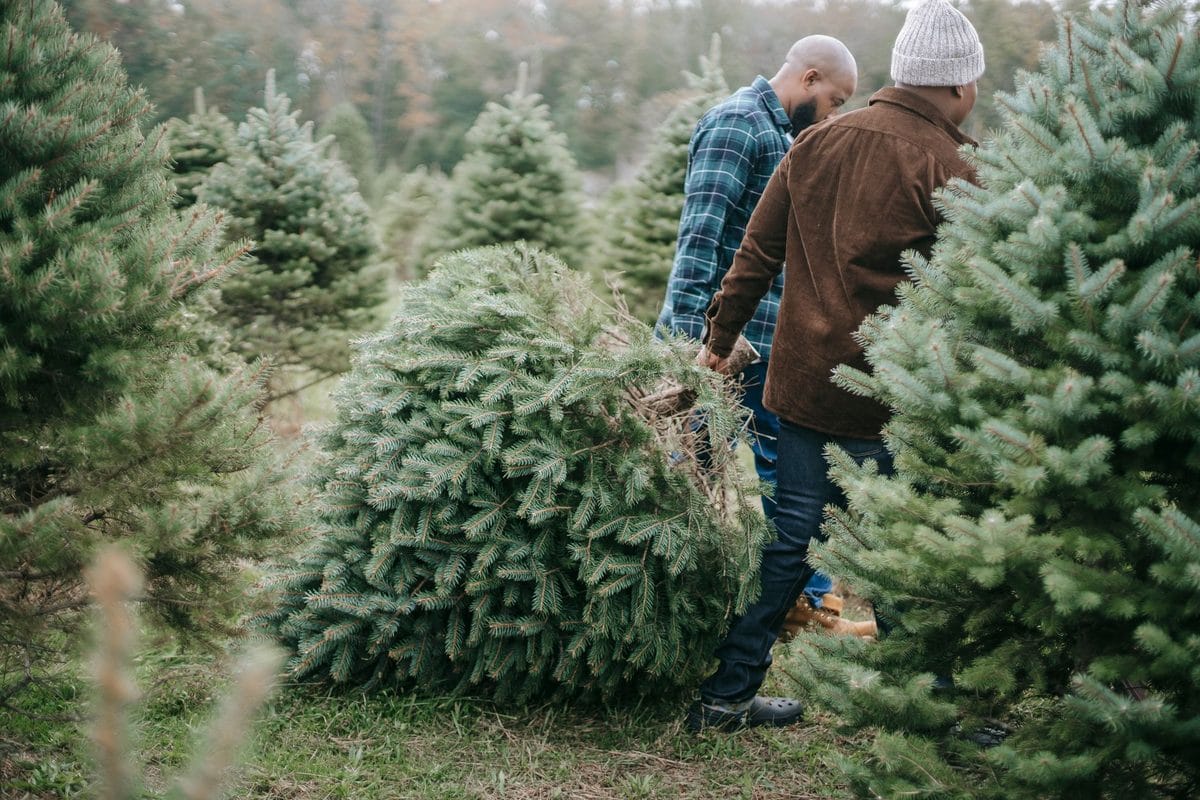
Every November the same argument starts in the same living room. One person wants the smell of a cut Fraser fir from the lot down the road. The other points at the artificial tree in the attic and asks why anyone would cut down a tree that dies in January. Both have a point, and that is exactly why the advice online is so unhelpful. Most of it was written by someone selling one side of the argument, and very little of it shows the arithmetic. The reasoning on each side is usually sincere, and the numbers behind it are usually thin.
The Number That Decides the Answer
The question is not real versus fake. It is how many years you will keep the artificial tree. A synthetic tree is mostly PVC and steel, and it arrives only after it has been manufactured, shipped and stored, so its carbon cost is paid before it ever touches your floor. That cost gets spread thin only across many Decembers. A tree that comes out of the box once is the worst option on the table, whichever way you look at it. Buying the tree is the cheap part of that equation, and most buyers never run the rest.
Published break-even estimates vary a lot. A 2018 life-cycle study commissioned by the American Christmas Tree Association, a trade group for artificial tree makers, put the break-even at about 4.7 years of reuse, and it left out the carbon that tree roots lock into soil. Other estimates run from roughly 5 years to more than 20, with many clustering between 10 and 20. The spread comes from three assumptions: how the real tree is disposed of, how far the buyer drives to the lot, and how long the artificial tree actually stays in use. Change any one of those and the winner can flip, which is why a single headline number should make you suspicious.
What Happens to a Real Tree After New Year's
This is where the cut tree wins or loses. Roughly 25 to 30 million real trees are sold in the United States every year, according to the National Christmas Tree Association, so the disposal question is a national one, not a niche one. A tree left at the curb or dumped in a landfill breaks down without oxygen and releases methane, a gas that traps far more heat than CO2 over its first couple of decades. The same tree chipped into mulch or composted gives its carbon back to the soil slowly, and that is the scenario behind the better numbers real trees get in most studies.
Check your city's sanitation or parks page now, before you need it. Many municipalities run a tree pickup in the weeks after New Year's and turn the collected trees into mulch, but the dates change every year and some ask you to strip the lights and tinsel first. Some tree lots and garden centers also take trees back for chipping, so ask at the point of sale rather than assuming the answer. A cut tree that ends up in a chipper is a far better outcome than one that spends January in a landfill with a plastic bag still tied to it.
Buying a Cut Tree Well
If the real tree is your choice, freshness decides how long it stays green in the house. Run your hand along a branch and watch the needles: a fresh tree holds most of them, while a dry one sheds a steady stream onto the floor. Fraser and noble firs generally hold their needles better than some other species, which is one reason they dominate the lots in many parts of the country. Buy from a farm or lot you can reach by car, because the drive back is where a lot of the carbon in the whole project quietly accumulates.
Once the tree is home, cut a fresh inch off the trunk and put it in a stand that holds a reservoir. A cut tree can drink a surprising amount of water in the first week, and an empty stand is the most common reason needles drop early. Keep the tree away from heat vents and the fireplace, and keep the reservoir topped up. A well-watered tree lasts the holiday season and stays a better bet for the chipper in January.
Keeping the Fake Tree Long Enough to Matter
Only the owner who keeps it for a decade has a real case.
Most artificial trees do not last that long in practice. A few seasons of kids, cats and boxing up in a damp garage bend the branch tips, fade the green, and loosen the hinge joints that hold the sections together. When that happens, the tree usually goes to the curb or to a donation center, and most curbside programs do not accept PVC at all. The version that pays off is the one you buy once and keep for ten years or more, which means paying for a sturdier model rather than grabbing the cheapest one on the shelf. The exception is the tree you already own. If it is still standing, the carbon decision has already been made for you, and the honest move is to keep using it.
The Living Tree Option, and Why It Usually Disappoints
A potted spruce or a rented tree with its root ball intact looks like the perfect compromise. In practice it is a commitment on a timeline. The tree needs cold outdoor ground soon after the holiday, and a root ball kept warm indoors for more than a week or two typically stresses the tree or kills it outright. Rental services exist in some metro areas, so check before you assume one is available near you. Without one, you are the one hauling a heavy, living tree back out the door in January.
The Lights Matter More Than the Tree Suspects
The tree gets all the attention, but the strings of lights wrapped around it often draw more electricity over the season than anything else in the room. Incandescent mini-lights are the old default, and they waste most of their energy as heat. The U.S. Department of Energy's ENERGY STAR program notes that LED lighting uses at least 75 percent less energy than incandescent lighting, so a set of LEDs left on for several weeks of evenings adds up to a noticeable difference on the utility bill. Check the label before you buy, because the cheapest multipack at the big-box store is not always the LED kind.
Ornaments are a smaller story, but the same logic applies. A box of glass pieces inherited from a grandparent outlasts a store-bought set of plastic decorations that will be replaced in two years. Reusing what you already have is the cheapest decoration on the list, and it does not require a single trip to the store.
How to Decide in Five Minutes
- If you already own an artificial tree, keep using it until it actually fails. The carbon was spent the day it was made, and a new purchase only adds to the debt.
- If you are buying new, a cut tree from a farm within driving distance is the better choice, as long as your city chips it.
- Living and rented trees make sense only with a yard to plant into, a cool spot to store the tree, and a plan for January.
- Skip the cheap artificial tree you plan to replace in two or three years.
Real trees are not automatically greener, and fake ones are not automatically the responsible pick. The decision that counts happens on the first weekend of January, when the tree leaves the house. Plan that exit before you buy.