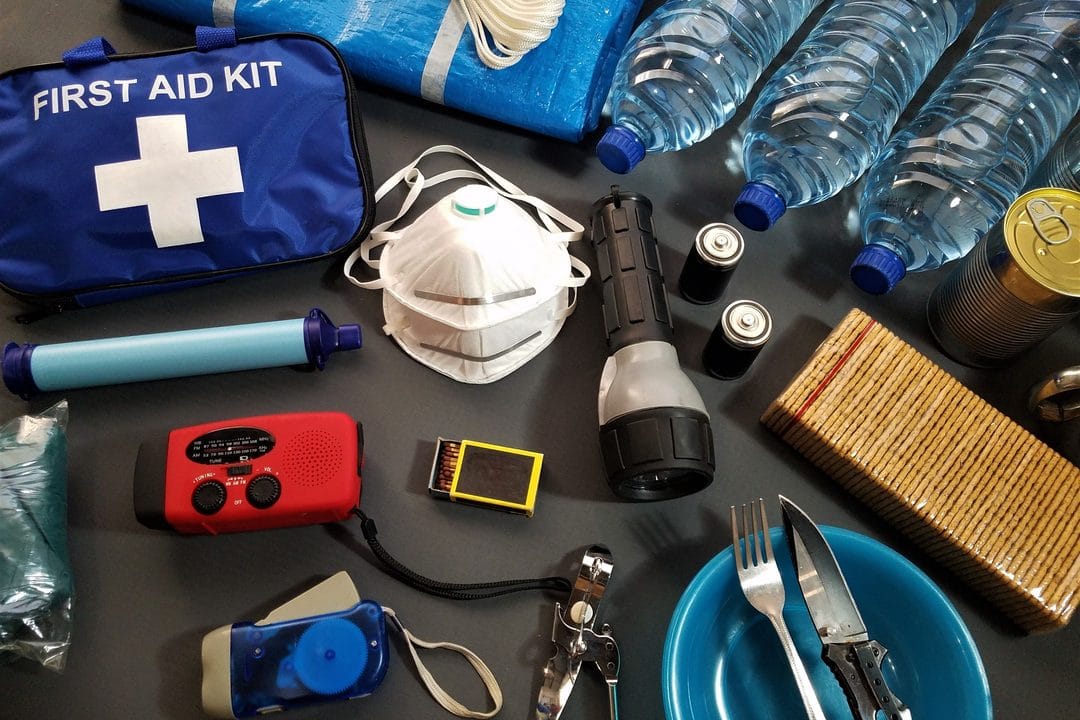
Every year around this time, the same cycle plays out along the Gulf and Atlantic coasts: a system forms off West Africa, forecasters start assigning names, and home-improvement stores from Houston to Charleston sell out of bottled water within 48 hours. What almost never makes the coverage is what happens to all that packaging once the storm passes — the flattened water cases stacked at the curb, the drained AA batteries, the ponchos that got one soggy use before the trash can. Hurricane season doesn't peak until mid-September, and September itself is National Preparedness Month, so there's still a real window to build a kit that survives more than one storm instead of turning into landfill the week after.
Why the Standard Go-Bag Checklist Is a Landfill in Waiting
Pull up almost any official emergency-kit checklist and you'll find the same list of consumables: a case of bottled water, a box of protein bars, a pack of AA batteries, a couple of glow sticks, a poncho still folded in its plastic sleeve. None of that is wrong, exactly — it's just designed to be bought once a year and thrown away, which is a strange way to prepare for something that happens every year. A family of four following FEMA's standard water guidance (one gallon per person per day, three-day minimum) burns through twelve one-gallon jugs per kit, and if that kit sits untouched and gets "refreshed" annually because the plastic starts leaching or the seal looks questionable, that's twelve jugs a year, every year, for as long as you live somewhere hurricanes reach. The Red Cross's own printable checklist runs nineteen items long, and roughly a third of them — the batteries, the hand warmers, the matches, the poncho — are built for exactly one deployment before the trash can. Multiply that across a decade in a coastal county and it adds up to well over a hundred pounds of packaging and dead batteries that never actually needed replacing, just refilling, recharging, or wiping down after use.
The reusable version costs more upfront and less over time, and it holds up better in an actual outage. A single 7-gallon rigid water container from a brand like Reliance or Igloo runs $18–$25 and lasts a decade with basic care, while the same volume in disposable jugs costs roughly $15 every single year once you count the ones you have to toss for looking cloudy. The math tips in favor of reusable gear within two to three seasons, which in hurricane-prone states means most kits pay for themselves before the paint even needs touching up.
Water You'll Actually Reuse, Not Just Drink Once
Skip the disposable jug entirely and go straight for food-grade rigid containers — WaterBricks and Reliance Aqua-Tainers are the two names you'll see most often at Ace Hardware and REI, and both are BPA-free, stackable, and rated for years of reuse if you keep them out of direct sunlight. Fill them with tap water, add two drops of unscented liquid chlorine bleach per gallon if you're storing for more than six months, and rotate the water into houseplants or laundry every spring rather than pouring it down the drain and refilling with fresh from the tap. A gravity-fed filter like a LifeStraw Mission or a Sawyer Squeeze, kept in the same bin, turns questionable tap or rain water into something drinkable without a single-use filter cartridge to throw away afterward.
Here's the part most checklists skip: buy one collapsible water container, not the rigid kind, for the actual go-bag you'd carry if you had to evacuate on foot. A 5-liter Nalgene Cantene or similar folds flat when empty and takes up a fraction of the space a rigid jug does, which matters when your bag also needs to hold a filter, a first-aid kit, and three days of food.
Light and Power Without a Drawer Full of Dead Batteries
Glow sticks and alkaline-battery flashlights are the single biggest source of kit waste, because they're built to be used exactly once and then discarded — a glow stick can't be recharged, and a drawer of "emergency" AA batteries corrodes and leaks if it sits unused for the three or four years between storms that actually hit your area. Replace both with a hand-crank or solar lantern (the Luci Outdoor Solar String Light and the Goal Zero Crush Light both run under $30 and hold a charge for months) plus a set of rechargeable NiMH batteries in a charger you keep plugged in near the kit, so a five-minute top-up before storm season replaces the entire "buy new batteries" step.
Power banks deserve the same treatment. A 20,000mAh Anker or Goal Zero power bank, charged to 100% and stored with the rest of the kit, will run a phone for several days of light use and can itself be recharged from a car outlet, a solar panel, or a generator once power's back — no cord of disposable batteries required to keep a phone alive through the worst of it. Rechargeable gear genuinely beats disposable in every normal scenario. The one exception worth naming is a grid outage that runs past a week, where a hand-crank radio with a built-in dynamo matters more than raw battery capacity, because at that point recharging anything electronic depends on having sun or a car running, and neither is guaranteed. Keep the power bank in a drawer near the front door rather than buried at the bottom of a storage bin — the habit of grabbing it on the way out only sticks if it's somewhere you'd already reach for a phone charger on an ordinary Tuesday, storm or not.
First Aid and Hygiene the Reusable Way
Standard first-aid kits lean hard on individually wrapped everything — foil packets of ointment, paper-backed adhesive bandages, alcohol wipes sealed one to a pouch. Keep the wound-care basics as they are (some things genuinely need to be single-use, and a burn dressing is one of them), but swap what doesn't need to be disposable. Reusable cloth bandages, a silicone-sealed first-aid case instead of a cardboard box, and a bar of castile soap instead of a bottle of hand sanitizer all do the same job with a fraction of the packaging, and none of them expire the way antibacterial gel does after two years on a shelf.
- Cloth handkerchiefs or bandanas for wound wrapping, sun protection, or filtering debris out of water in a pinch
- A menstrual cup or reusable pads take up far less room in a three-person go-bag than a case of disposables, and neither needs replacing every few months.
- A wind-up or battery-free emergency whistle rather than the plastic promotional kind that cracks after a season in a hot car
- Refillable travel bottles for any liquid medication or antiseptic you need to keep in the bag year-round, topped off rather than replaced
Skip the disposable ponchos
A $3 rain poncho tears the first time you climb through debris or push through wind-driven rain, and it's plastic film from the start, meant for exactly one use. A packable rain jacket costs closer to $25–$40 but survives storm cleanup, yard work, and every ordinary rainy commute in between — it's not really an "emergency" item at all once you own one, just something that happens to live in the kit.
Food That Doesn't Expire Straight Into the Trash
Freeze-dried and canned goods with two- to five-year shelf lives are genuinely the right call for long-term storage — nobody's arguing for fresh produce in a hurricane kit — but the packaging waste adds up fast when every meal comes in its own foil pouch. Choose bulk canned goods in reusable, stackable bins over single-serving pouches wherever the choice exists, and store dry staples like rice, oats, and beans in wide-mouth mason jars or heavy Mylar bags inside a rigid bucket rather than in their original cardboard boxes, which pick up moisture and pests faster than glass or metal ever will.
Buy shelf-stable staples you already cook with, not specialty "survival food" branded meals that cost three times as much per calorie and taste like it. Peanut butter, canned beans, canned tuna, and dried fruit cover protein and calories without a single unfamiliar ingredient, and because they're things your household already eats, nothing goes stale before you use it — you just fold the oldest cans into a regular dinner and replace them, instead of discovering a expired case of "emergency lasagna" three years after buying it.
Rotating the Kit Instead of Rebuilding It From Scratch
Most kits don't fail on the first hurricane — they fail on the third one, when nobody remembers what's already in the bin and everyone buys another round of bottled water on top of it.
Set one fixed date — the start of hurricane season on June 1 works well, or National Preparedness Month in September if your household's storms tend to arrive later — and treat it as kit day rather than shopping day. Check every expiration date, rotate canned food into that week's actual meals, top off the power banks, and test the hand-crank radio and lantern instead of assuming they still work. Anything with a "best by" date that's within three months gets used now, not stockpiled until it's actually needed and turns out to be dead weight. This single habit is what separates a kit that's ready in year five from one that's quietly full of corroded batteries and a poncho that's crumbled to dust in its own packaging.
None of this is about spending more to feel virtuous before a storm. It's about not restocking the same disposable junk drawer every June, and about having gear that still works the third, fourth, and tenth time a name gets circled on a map heading your way.