Walk through any college stadium parking lot two hours after a home game ends and you'll see the same debris field, whatever the mascot: crushed Solo cups pooling in the grass, aluminum cans that missed the recycling bin by a few inches, paper plates soaked through with barbecue grease, and enough shrink-wrap and chip bags to fill a dumpster before the stadium lights even go off. Cleanup crews at big programs haul away serious tonnage after a single Saturday, and most of what they're bagging up left the tailgate lot as single-use plastic that got maybe twenty minutes of actual use before hitting the asphalt. None of that is inevitable. The 2026 college football season kicks off in the last week of August, which means tailgate season starts right now, and the gear you buy — or don't buy — in the next two weeks decides whether your setup adds to that pile or quietly skips most of it. This isn't about giving up the cooler full of beer or showing up with a sad vegan spread nobody touches. It's about swapping four or five specific habits for versions that cost roughly the same as what you're already doing, and sometimes less.
Solo Cups Aren't the Bargain They Look Like
A 50-count sleeve of 18-ounce Solo cups runs about $6–8 at Walmart or Target, and if you're tailgating with six friends across an eight-game home schedule, three cups per person per game adds up to roughly 144 cups a season — call it three sleeves, or $20–25, most of which ends up in a landfill bag by Sunday morning. A four-pack of Yeti's stackable Rambler cups costs about $25, holds up to being run over by a cooler cart, and survives every season after that one for free. Buy six hard-plastic reusable cups once and you'll spend less by your third tailgate than you would on a fresh sleeve of Solo cups every single Saturday. The only real downside is remembering to rinse them before the drive home, which is a smaller inconvenience than it sounds once it's part of the pack-up routine.
The Cooler Question: Bottled Water Adds Up Faster Than You'd Think
A case of 24 bottled waters costs $4–6 at most grocery chains, which sounds cheap until you're buying a fresh case every Saturday for a group of eight — that's roughly $50–70 over an eight-game season just for water, on top of whatever soda and beer you're already hauling. An Igloo five-gallon beverage jug with a spigot costs about $18–22 and refills from a tap for free, and paired with a stack of aluminum cans instead of plastic-ringed bottles for the beer, it cuts your tailgate's plastic footprint by more than half without anyone noticing a difference in the cooler. Aluminum matters here too: it's one of the few materials that actually gets recycled at scale in most college towns, while thin plastic water bottles from a tailgate lot mostly don't make it into a functioning recycling stream at all.
Grilling Fuel: Propane, Charcoal, or Pellets
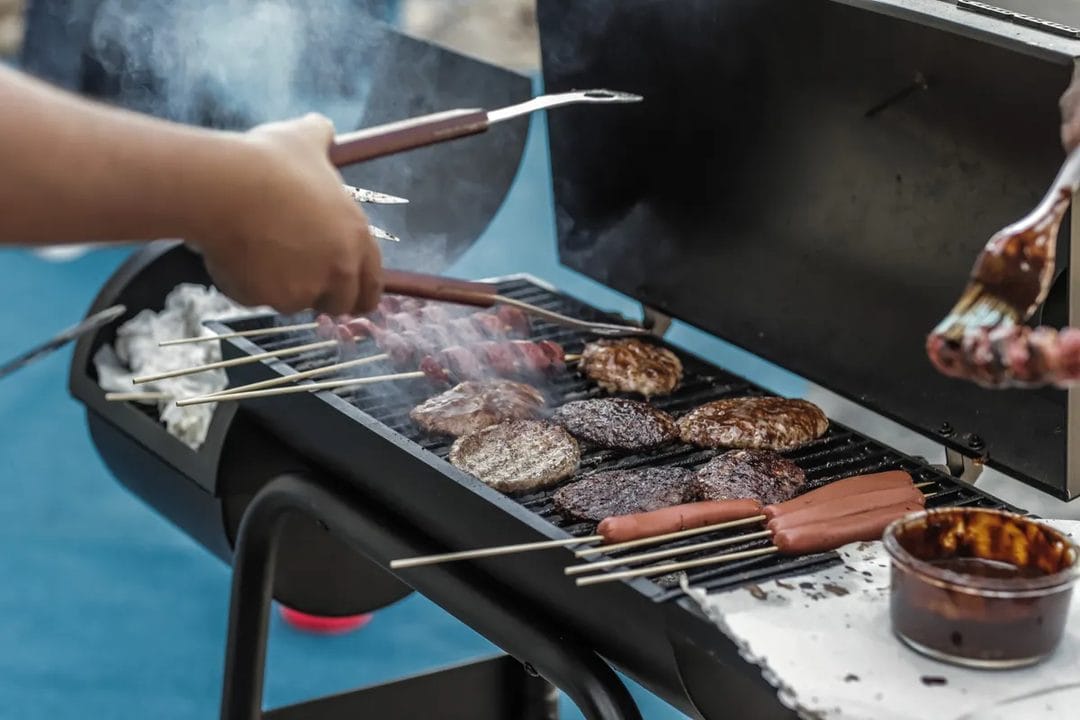
Propane burns cleaner than charcoal, producing far less particulate matter and none of the ash you have to deal with after — a 20-lb tank exchange at Blue Rhino runs about $22–25 and lasts several tailgates depending on how much you're cooking. Charcoal briquettes give you that smoke flavor people genuinely prefer for burgers, but they release more fine particulates per hour of cooking, and a chimney starter from Weber (about $18) at least gets you off the lighter-fluid habit, which is worse on both fronts. Pellet grills like a Traeger split the difference reasonably well, running on compressed wood rather than raw charcoal, though they need an outlet or a portable battery pack to run the auger, which isn't always practical in a parking lot.
None of this matters if the food isn't ready by kickoff.
That's the real reason most people who switch from charcoal to propane stick with it — charcoal needs a solid 30–40 minutes to reach cooking temperature, and nobody wants to explain to six hungry friends why the burgers are still pink twenty minutes before the opening drive. One caveat worth checking before you commit: some stadium lots cap propane tank size or ban tanks over a certain capacity entirely, so it's worth a quick look at your school's tailgate policy page before you haul a 20-pounder across the grass and get turned away at the gate.
Buying Food for a Crowd Without a Mountain of Shrink Wrap
Individually wrapped snack packs and pre-portioned string cheese look convenient in the store, but they're some of the worst plastic-to-food ratios you can buy for a group of any real size. Skip them — buy the whole block of cheddar from a local grocer's deli counter, cut it into slices at home, and you're down to one piece of butcher paper instead of a dozen small plastic wrappers, usually for a lower price per pound too. Buying chips, buns, and condiments in bulk sizes from a warehouse club and portioning them out yourself does the same thing at a bigger scale: one large bag of tortilla chips instead of six single-serve bags, one jar of salsa instead of six plastic cups nobody finishes. Local farmers markets are worth the extra stop if your team plays a September home game before produce season winds down, since a $15 flat of peaches or a bag of sweet corn from a nearby farm stand travels well in a cooler and doesn't come wrapped in anything at all. Even switching just the snacks and skipping the individually bagged everything cuts out more plastic than most people expect from one grocery run.
Building a Trash Station People Actually Use
A tailgate with one trash bag zip-tied to a folding table gets a mess by halftime, because nobody sorts anything when there's only one option in front of them. A simple three-bin setup changes that:
- One bin labeled "cans and bottles" — clearly marked, ideally with a photo taped on since not everyone reads signage at a tailgate
- One bin for trash that isn't recyclable, which after the first two fixes above should be a genuinely small pile
- A third bin or bag for food scraps if your campus or city runs a compost drop-off (a growing number do, and some athletics departments now partner directly with local composting haulers for game days)
Command hooks or a couple of bungee cords keep the bags from collapsing in on themselves when the wind picks up, and reusable canvas bins fold flat in the trunk for the drive home. Ohio State and a handful of other big programs have run "zero waste" pilot games where staff sort bins at the gate — you don't need a university-scale operation to copy the basic idea at your own tailgate spot.
Getting There: Carpooling Does More Than Cut Emissions
Gas is running $3.00–3.50 a gallon in most of the country this season, and a round trip to a stadium 90 minutes away burns through $25–35 in fuel per vehicle — money that gets split six ways in a carpool and paid in full if everyone drives separately. Parking passes at most schools cost the same whether one person is in the car or six, which means a single shared pass across a full carload can turn a $40 parking fee into $7 a head instead of $40 each if your group usually arrives in three separate cars. Beyond the math, fewer cars circling a packed lot looking for a spot means less idling exhaust hanging over the tailgate itself, which is the part nobody thinks about until they're standing in it.
What Actually Happens to the Leftovers
Most tailgates over-cater on purpose, because running out of food two hours before kickoff is worse than having extra. The problem is what happens to that extra food afterward, and the honest answer for most groups is that it sits in a cooler until it's not safe to eat anymore. Campus chapters of the Food Recovery Network operate at more than 150 colleges and coordinate pickup of untouched, still-safe food from tailgates and campus events — a quick email to your school's sustainability office before game day can get your lot added to a pickup route. Failing that, prepped food that never touched a grill — unopened chip bags, whole fruit, sealed condiments — travels fine to a shelter drop-off on the way home, which beats tossing a full cooler of hot dog buns straight into the dumpster behind section 114.