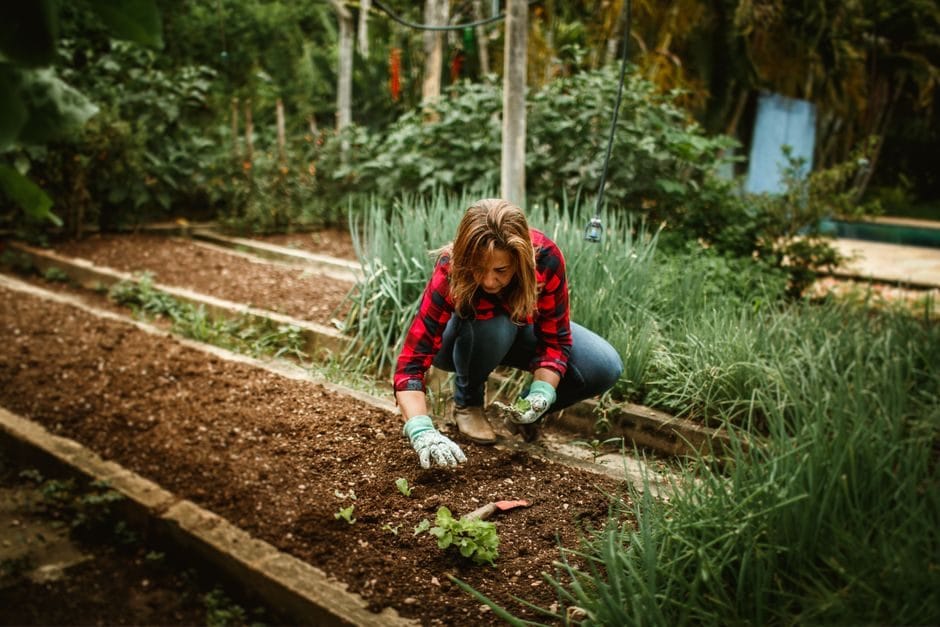
Walk past most backyard vegetable beds in late August and you'll see the same thing: dirt. Bare, exposed, drying out in the sun after the tomatoes and squash get pulled. That soil will sit there through fall rain, winter freeze-thaw cycles, and early spring downpours with nothing holding it together — and every one of those events washes away a little more of what made it fertile in the first place. Rain doesn't just soak in; it runs off, taking topsoil and dissolved nutrients with it, especially on any bed with even a slight slope. Freeze-thaw cycles do their own quiet damage too, heaving loosened soil upward overnight and leaving it more exposed to wind by morning. By the time April rolls around, plenty of gardeners are standing over compacted, nutrient-thin dirt wondering why last year's tomatoes did better than this year's — without ever connecting it back to the seven empty months the bed spent doing nothing.
Cover crops fix that, and they do it for less money than most people assume. Instead of leaving beds fallow from October through March, you sow a fast-growing crop specifically because you're never going to eat it — its job is to hold the soil together, pull nitrogen out of the air, and get chopped down before spring planting. Gardeners in the Northeast and Midwest have used the practice for generations on small scale, and it's having a real resurgence among raised-bed and community-plot growers who got tired of buying bagged compost every April.
The Species That Actually Work in a Backyard Bed
Commercial farms plant cover crops across acres with a seed drill. You don't need that kind of equipment, and you don't need most of what shows up in farm-scale cover crop guides. For a home garden, four species cover nearly every situation:
- Crimson clover — a nitrogen-fixer with a bright red bloom that pollinators genuinely love in spring, which matters if you're also trying to support bees before your main crops flower.
- Winter rye (cereal rye, not annual ryegrass) — the toughest option, germinates in cold soil, survives down to roughly -30°F once established, and produces an enormous root mass that breaks up compacted clay.
- Buckwheat, for anyone starting in late summer instead of fall — it grows fast, smothers weeds within three weeks, and dies at the first frost, so it works as a quick soil-builder before you switch to a true winter cover.
- Field peas or Austrian winter peas — another nitrogen-fixer, usually mixed with rye so the peas climb the rye stalks instead of flopping over.
Winter rye is the one to default to if you only try one thing this year. It's cheap, forgiving of bad timing, and nearly impossible to kill by accident — which, frankly, is also its one real downside, because you have to terminate it deliberately before it sets seed or it becomes next year's weed problem.
Matching Species to Your Climate
USDA hardiness zone matters less for cover crops than it does for perennials, since you're not asking anything to survive for years — just to establish before hard frost and hold through winter. Gardeners in zones 3–5 (northern New England, the Upper Midwest, the Mountain West) should lean on winter rye and hairy vetch, both of which shrug off deep freezes without special protection. In zones 6–8, crimson clover and field peas do well because winters are cold enough to stop growth but rarely cold enough to kill an established stand, so the plants sit dormant rather than dying outright. South of zone 8, buckwheat can be resown two or three times through fall since frost arrives late or not at all, and daikon radish becomes a strong option for breaking up compacted soil before it eventually rots in place and leaves a channel behind it. None of this needs to be exact — a gardener in zone 6b who plants a zone 5 mix loses nothing but a little cold-hardiness margin, and the seed still germinates and grows. What actually matters more than the zone number is simply getting seed into the ground before that first hard frost, whatever species you land on.
Timing: August Doesn't Mean the Same Date Everywhere
The real rule isn't a calendar date — it's "roughly six to eight weeks before your first expected frost," so the crop has time to establish real root mass before growth slows. In Minneapolis or Burlington, Vermont, that lands in mid-to-late August. In Richmond or Nashville, you've got until late September. In Atlanta or Dallas, early-to-mid October still works. Check your local frost date (your state's extension office publishes one, and it's more reliable than any national gardening calendar) and count backward.
Miss that window and you're not out of luck, exactly — you're just choosing a different crop. Buckwheat sown too late for rye to establish will still smother weeds and add organic matter before it dies at first frost, and dead buckwheat residue is a perfectly good winter mulch on its own even without a true overwintering cover behind it.
Sowing It: Simpler Than the Seed Packet Makes It Sound
You don't need to till first, and honestly, you probably shouldn't — tilling destroys the soil structure you're trying to build back up. Clear the spent plants, rake the surface lightly to loosen the top inch, broadcast the seed by hand at the rate on the bag (roughly 2–3 lb of rye per 1,000 square feet, or about a cup and a half for a standard 4x8 raised bed), and rake again just enough to cover most of the seed with a quarter-inch of soil. Water it in if rain isn't coming within a day or two. That's the entire process.
- Clear finished summer crops and any obviously diseased plant debris.
- Loosen the top inch of soil with a hard rake — no need to dig deeper.
- Broadcast seed evenly, then rake lightly to bury most of it.
- Water if the forecast is dry for more than 48 hours.
A pound of winter rye from Johnny's Selected Seeds or Southern Exposure Seed Exchange runs about $8–12 and covers 300–500 square feet, which is enough for most backyard vegetable gardens with seed left over. Home Depot and Lowe's both carry smaller cover-crop mixes seasonally for under $15, aimed exactly at raised-bed gardeners who don't want a 25-pound farm sack sitting in the garage all winter.
What's Actually Happening Underground All Winter
Nothing you can see, which is exactly the point.
While the top growth sits dormant or slowly dies back, the root system keeps doing its job below the surface — clover and pea roots host nitrogen-fixing bacteria in small nodules, converting atmospheric nitrogen into a form next year's plants can use, while rye roots physically thread through compacted soil and leave channels behind when they eventually decompose. Earthworm activity tends to increase under an overwintering cover crop compared to bare soil, since the roots and surface residue give worms both food and cover from freezing temperatures near the surface. None of this shows results by Thanksgiving. It shows up in April, when you pull back dead rye stalks and find soil that crumbles instead of soil that's compacted into a brick from four months of rain impact.
Terminating the Cover Crop Before Spring Planting
This is the step people skip researching and then panic about in April when rye is suddenly waist-high. Cut it down — with a string trimmer, hedge shears, or a scythe if you're feeling ambitious — 2 to 3 weeks before you want to plant, ideally right as it starts to flower but before it sets seed. Leave the cut residue right on the bed as mulch rather than hauling it to a compost pile; it'll break down in place and feed the soil it just protected. For a small raised bed, you can skip cutting tools entirely and just crimp the stalks flat with a board or your own weight, which stops growth without removing the organic matter.
Clover and peas are more forgiving than rye on timing since they don't get woody, but rye left uncut for even an extra two weeks past flowering can produce viable seed that turns into an unwanted grass problem in next year's beds. Don't wait until it looks like a problem — cut it while it's still green and soft, because that's also when it decomposes fastest and returns nitrogen to the soil quickest.
The Real Cost Comparison
A pound of cover crop seed at $8–12 treats a bed that would otherwise need real inputs by spring. Compare that to a typical spring routine: two or three bags of Miracle-Gro or generic garden compost at $6–9 each, a 32-pound bag of Milorganite or similar organic fertilizer at roughly $18–22, and maybe a bale of straw mulch at $8–10 to control spring weeds and erosion until plants fill in. That's easily $40–60 per bed, every single spring, for inputs that a cover crop replaces almost entirely — the nitrogen comes from the air via the clover or peas, the organic matter comes from the decomposing rye residue, and the erosion control comes free from November through March instead of needing straw in April.
It's not a wash for every gardener, though. If you're renting a community garden plot with a strict lease that requires the bed to be visibly cleared and tilled by a certain fall date, cover cropping may simply not be allowed under the plot rules — check before you buy seed, because some community gardens explicitly ban anything that isn't a harvestable crop for liability and appearance reasons. And if your growing season runs long enough that you're still pulling peppers in late October, there may not be enough of a window left to establish a cover crop before hard frost, in which case a thick layer of shredded leaves — free, and available on every curb in October — does a reasonable job of the same erosion-control work.
Starting Small This Year
You don't need to convert every bed the first season. Pick the one that gets hit hardest by winter rain runoff, or the one that struggled most this summer, and sow that single bed in winter rye before the end of the month. A $10 bag of seed and twenty minutes of raking is a low-stakes way to see the difference for yourself before you commit the whole garden to it next fall.