Working from home has real perks, but it also shifts a chunk of energy use, lighting, heating, cooling, and equipment, from the office onto your own electric bill. The whole house runs all day instead of sitting empty. The good news is that a home office is easy to make efficient, and the same habits that cut your bill also cut the energy your workday uses.
Right-Size Your Comfort
The biggest home-office energy cost is usually heating or cooling the space all day. You do not need to condition the whole house for one person at a desk.
- Heat or cool just your workspace with a small, efficient unit instead of the whole home.
- Dress for the season and use a fan or a sweater to widen your comfortable range.
- Set the thermostat back in the rooms you are not using during the day.
Use Daylight and Efficient Gear
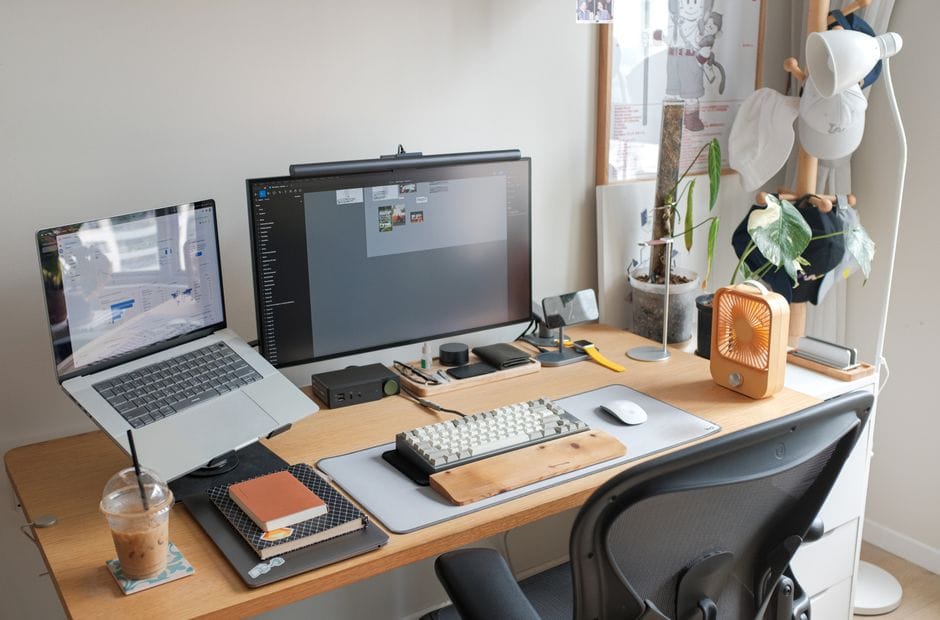
Set your desk near a window and you can work by daylight for much of the day, with the lamp off. When you do need light, an LED desk lamp uses a fraction of the power of older bulbs. A laptop draws far less energy than a desktop with a big monitor, and laptops are built to sip power.
Tame the Phantom Load
A home office is full of chargers, monitors, printers, and speakers that draw power even when idle. Put them on a power strip and switch it off at the end of the day so nothing sits there sipping electricity overnight. Enable sleep settings so equipment powers down when you step away.
Take Advantage of Being Home
Being home all day creates chances to save elsewhere too. Run the dishwasher or laundry during off-peak hours if your utility charges by time of use. Skipping the commute already saves a tank of gas, the single biggest energy win of working from home.
A home office does not have to spike your bill. Condition just your space, lean on daylight and efficient gear, and cut the phantom load, and remote work stays light on energy as well as on your commute.