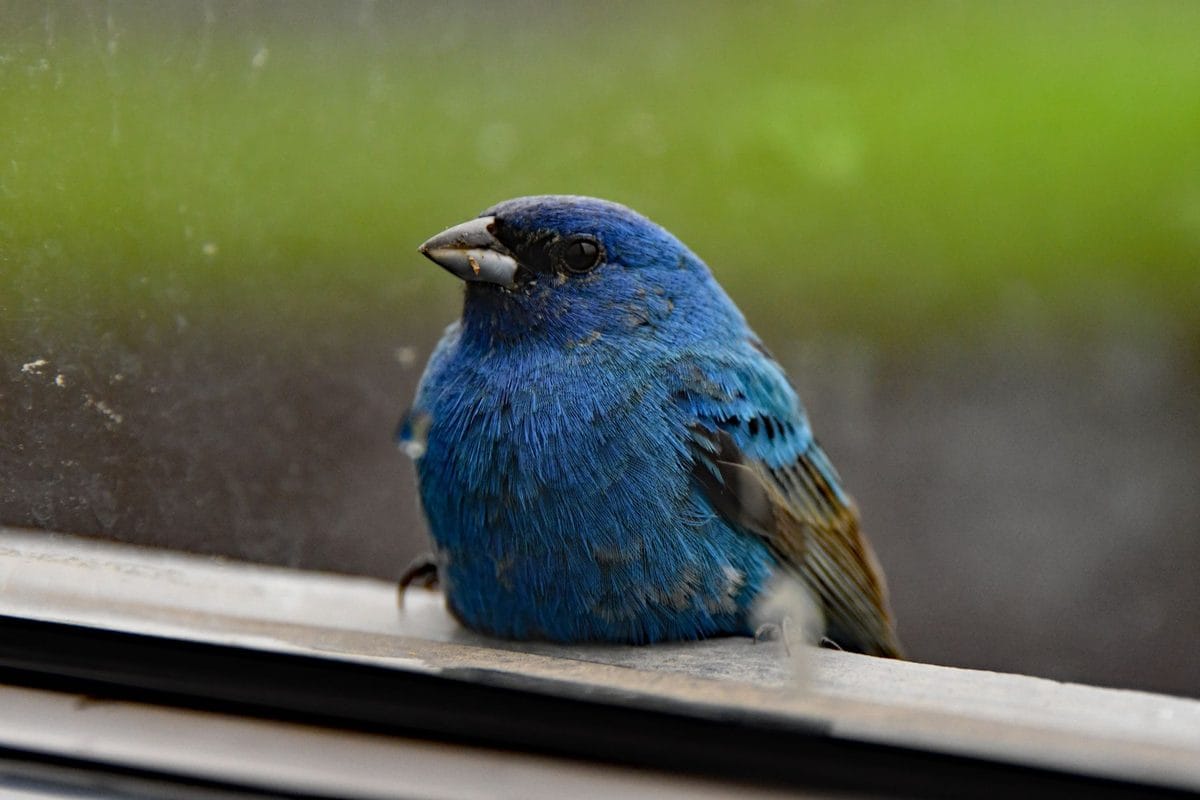
The sound is unmistakable: one flat thump against the glass, then silence, and a small bird on the deck that may or may not get back up. It happens at kitchen windows and sliding doors from Maine to Oregon every fall, and the scale is bigger than most people guess. More than a billion birds die in collisions with glass in the United States each year, according to the U.S. Fish and Wildlife Service, and the agency says most of those fatal strikes happen at homes and buildings shorter than four stories. Not skyscrapers. Houses like yours.
October sits in the middle of the worst stretch. BirdCast, the radar-based forecasting project run by the Cornell Lab of Ornithology and several university partners, treats August 15 through November 30 as the full fall migration period, and over 80 percent of migratory species in North America travel at night. On the night of September 25, 2025, its radar counted more than 1.2 billion birds heading south, the largest single-night total since live mapping began in 2018. A Cornell scientist put an ordinary peak-season fall night at closer to 400 million birds in the air over the country at once. Plenty of those travelers drop into neighborhoods at first light, and what they see in a clean window is a convincing picture of sky, shrubs, and a place to land.
Find the Windows That Do the Damage
Before you buy anything, walk outside and look at your own glass.
American Bird Conservancy (ABC) says almost half of all collisions take place at home, and that a small number of problem windows usually cause most of the trouble. Start with the ones that have already produced a thump. Then check large windows and glass doors that reflect trees or sky, or that let a bird see straight through the house to greenery on the other side, and any window facing a feeder, a birdbath, or a berry bush. In many cases, ABC says, fixing only those windows stops almost all of the collisions. Look at the glass from the yard at different times of day, because the reflection that fools a bird at 8 a.m. can look completely different at 2 p.m. once the sun has moved. If you keep a rough tally on a sticky note near the back door, you will know within a couple of weeks which pane deserves the first fix.
The Two-Inch Rule, and Why One Hawk Sticker Fails
Whatever you put on the glass goes on the outside. ABC is blunt about this: a treatment applied to the inside surface gets swallowed by reflections outside, and a bird never sees it. The pattern also has to be big enough and dense enough. Dots should be at least a quarter inch across, stripes at least an eighth of an inch wide, and you should be able to see the pattern clearly from 10 feet away. White tends to perform best because it contrasts with most reflections. Spacing is the part people get wrong, since ABC's home guidance calls for a two-inch-by-two-inch grid, with no gap wider than two inches in any direction, because small songbirds and hummingbirds can easily fly through a four-inch opening.
That is why a lone hawk silhouette in the middle of a big pane does almost nothing. NYC Bird Alliance says birds are not frightened off by a hawk sticker or any single decal; its tip is to cut the sticker into pieces and space them two inches apart across the whole window. Skip recorded distress or predator calls too. Birds get used to them quickly, and they have not been shown to reduce collisions.
Standards do vary a little by method. Hanging cord is usually spaced about four inches apart (the Fish and Wildlife Service says less than four inches), which is looser than the grid rule. If hummingbirds visit your yard, go tighter. And drawing the blinds is not the all-purpose fix it sounds like: NYC Bird Alliance warns that on reflective glass, closed blinds often do nothing and can sometimes make the problem worse. Where they earn their keep is after dark, when they hold lamplight indoors.
What It Costs, Window by Window
The Fish and Wildlife Service publishes per-square-foot estimates for the common fixes. Multiply them by a typical 3-by-5-foot window, which is 15 square feet, and the spread is wide.
- Parachute cord curtains: about 11 cents per square foot, or roughly $1.65 for that window. These are 1/8-inch cords hung outside from the top of the frame.
- Tempera paint: 13 cents a square foot, about $2 for the window. It is non-toxic, and the agency notes it comes off with vinegar and water.
- Exterior insect screens run about $1.83 per square foot, so roughly $27, and they cut reflections while softening a strike if a bird does hit.
- Tape costs about $2.50 per square foot ($38 for the window), film $4 to $6 ($60 to $90), and adhesive dot patterns $8 to $12 ($120 to $180), among other products.
Those figures come from an agency page first published in 2021, so shelf prices have probably moved, but the gap between the cheap options and the expensive ones has not gone anywhere. For a handful of problem windows, choose cord or paint. Both cost a few dollars, tempera washes off when you are done with it, and cord can come down in spring without leaving a layer of adhesive to scrape. Skip the premium dot patterns unless a specific window genuinely demands them. For a big picture window that reflects the whole yard, a full exterior screen is the better choice, and it also cuts the reflection that fools birds.
Turn Down the Lights Under the Flyway
Glass is only half of it. BirdCast asks people to switch off non-essential lights from dusk to dawn during the critical migration periods, and many Audubon chapters and state programs, Lights Out Texas among them, name the hours as 11 p.m. to 6 a.m. Bright light can pull night migrants off course and toward lit buildings, which is where the collisions pile up. At home, that means the porch light you leave on out of habit, landscape lighting that washes up into trees, and lit rooms with blinds open to the yard. BirdCast's guidance also flags spaces where greenery sits behind lit glass, and a sunroom full of plants fits that description neatly.
Some lights have to stay on for safety. For those, aim the fixture down and shield it, put it on a motion sensor or a timer, and use a warm bulb. BirdCast puts the ceiling at 3,000 kelvin for lights you cannot turn off, and warm-white bulbs labeled 2700K sit under it. The Fish and Wildlife Service points out a side benefit: timers and sensors can also reduce your energy costs.
Dark yards will not fix daytime strikes, though. The Bird Collision Prevention Alliance's handbook notes that most collisions happen in daylight, many of them early in the morning as birds become active. Lights-out is the night shift of the job and window treatment is the day shift. BirdCast also offers local migration alerts, so you can save the strictest lights-out discipline for the nights its forecast model flags as high.
Feeders, New Windows, and Other Fine Print
Where you hang the feeder matters more than people expect. The Cornell Lab's advice is to place feeders within 3 feet of a window or more than 30 feet away. Up close, a bird leaving the feeder cannot build enough speed to hurt itself badly if it does hit the glass. Far away, it has room to see the window and steer around it. The distances in between, say 10 or 15 feet, are the ones to avoid. Birdbaths follow the same logic.
Replacement windows deserve a warning. ABC reports that people often see a jump in collisions after swapping out old windows, for three reasons: efficient coatings and extra panes can make glass more reflective, screens may sit between the panes or cover only the bottom half, and big single panes lack the muntins that once broke up the view. That is the catch with the energy-efficient windows homeowners are so often told to buy. ABC's advice is to install full external screens, even on windows that do not open, or to apply one of the treatments above before the next migration wave rather than after the first casualty.
When a Bird Hits Anyway
Audubon's guidance for a small bird that has just struck a window is to place it in a paper bag or a box with air holes, lined with paper towels, and keep it somewhere quiet. Do not offer food or water. Audubon chapters differ a little on how long to wait (the Debs Park chapter says an hour), but they agree on calling a licensed wildlife rehabilitator, because injuries like bruising, eye damage, and fractures do not show from the outside. Plenty of people believe a bird that shakes off a hit and flies away is fine, and the study below suggests that belief is often wrong.
A 2024 study in PLOS ONE, led by researchers at Fordham University with American Bird Conservancy, NYC Bird Alliance, and Stony Brook University, followed more than 3,000 collision victims brought to rehabilitators. Only 40 percent survived, even with expert care. The authors concluded that older death-toll estimates based on birds found dead at the scene undercount the real total, which is part of why ABC now says the toll runs well past a billion a year.
So begin with the one window that has already thumped this fall. A spool of 1/8-inch paracord, a stepladder, and a free Saturday morning will cover it, and while you are out there, you can sign up for BirdCast's local migration alerts at birdcast.org.