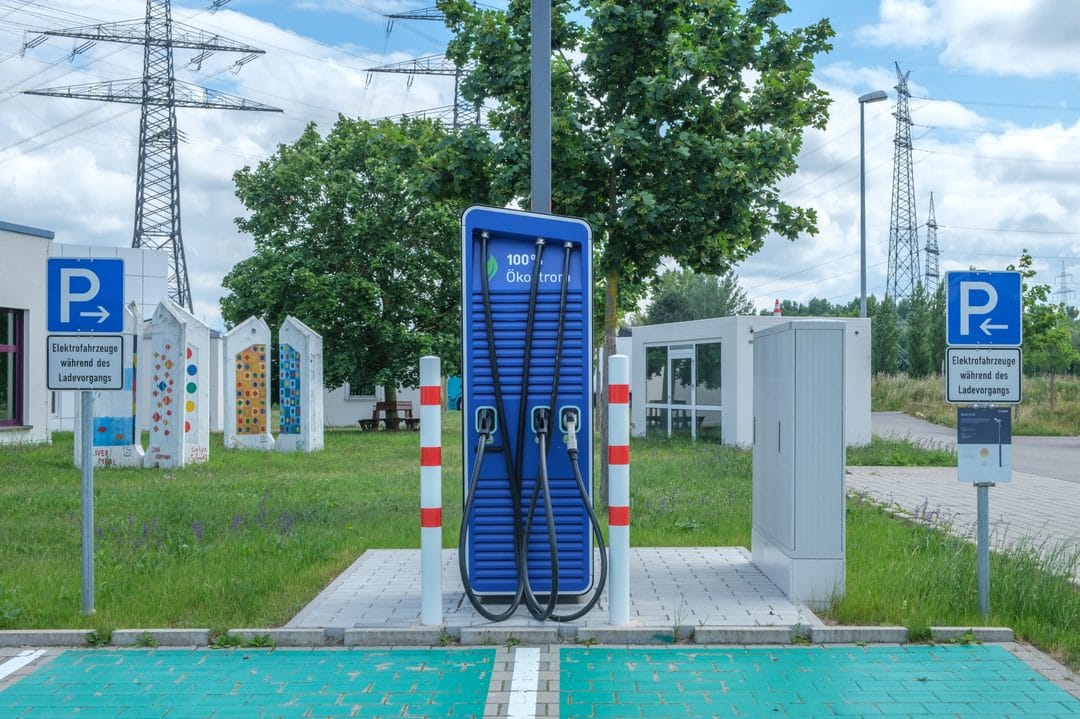
Somewhere around Amarillo, my cousin pulled her Ioniq 5 into a truck stop with 11 percent battery left and a two-year-old asleep in the back seat. She hadn't looked at a charging map since Oklahoma City. Forty minutes and a vending-machine dinner later, she was back on I-40 — annoyed, not stranded, but it didn't need to go that way. Summer road trip season means millions of Americans loading up the car for a lake house, a national park, or a grandparent's driveway, and a growing share of those cars run on batteries instead of gasoline. The trip itself doesn't have to be harder in an EV. The planning just has to happen before you leave the driveway, not somewhere past Amarillo.
Why This Summer's Road Trip Math Actually Works in an EV's Favor
Long-distance driving used to be the argument against owning an electric vehicle, and for years that argument had teeth. Charging networks were thin outside major metro corridors, fast chargers broke down more often than gas pumps ever did, and route planning meant guessing rather than knowing. That picture has changed enough that a cross-country trip is no longer a leap of faith for most newer EVs. Electrify America, EVgo, and the Tesla Supercharger network — now open to non-Tesla vehicles with a NACS adapter or a built-in NACS port — cover the interstate system far more completely than they did even three years ago. A Hyundai Ioniq 5, Kia EV6, Ford Mustang Mach-E, or Chevy Equinox EV can now string together 200-plus-mile legs on I-70, I-80, or I-95 without detouring far off the highway. None of this means charging is invisible the way a gas fill-up is. It means the trip is plannable, which is a different and more useful thing.
Build the Route Around the Chargers, Not the Other Way Around
Start with an app built for this, not a general map. A Better Route Planner factors in your specific vehicle's battery size and real-world efficiency, then plots charging stops based on outside temperature, elevation change, and how fast you're likely to drive — a Tesla Model Y at 80 mph across Wyoming burns noticeably more range per mile than the same car at 65 through Ohio. PlugShare layers in something ABRP can't: recent driver reviews of individual charging stalls, including which ones are broken, blocked by a gas car, or reliably slow. Cross-reference the two before you commit to a route, because a charger that shows as "available" on one map can be offline on the other. And don't skip the low-tech backup: call ahead or check the network's own app for real-time stall status if you're routing through a rural stretch with only one or two chargers for eighty miles in either direction. Rivian, Tesla, and most 2025-and-newer EVs also build trip planning into the dashboard navigation, recalculating stops in real time if you take a detour or the weather shifts — worth using as a backup, not a replacement for the two apps above.
NACS, CCS, and the Adapter Question
NACS has already won.
Ford, GM, Rivian, Hyundai, and Kia have all shifted their newer EVs to the North American Charging Standard plug, the same one Tesla uses, which means the Supercharger network — long the most reliable fast-charging network in the country — is now available to a majority of new EVs either natively or through an adapter. If you're driving an older CCS-equipped vehicle, a NACS adapter from your automaker, not a generic third-party one, is worth the $150–$230 price tag before a long trip, since it roughly doubles the number of reliable fast chargers you can use. Check your automaker's app before you leave: Ford, for instance, activated Supercharger access through the FordPass app rather than requiring a dealer visit. The transition hasn't been instant or painless, and plenty of CCS stations from smaller operators still get inconsistent maintenance — exactly the kind of stall PlugShare reviews are useful for catching before you're the one standing next to it.
The Charging Stop Rhythm That Doesn't Feel Like a Chore
Charge to 80 percent, not 100. DC fast charging slows dramatically past that point as the battery protects itself, so the last 20 percent can take as long as the first 60 did. Plan stops around a meal, not a phone check. A 25-to-35-minute charging stop lines up naturally with a drive-through breakfast or a sit-down lunch, and most charging plazas near interstates now cluster around exactly that kind of stop — Electrify America stations are disproportionately sited next to Walmarts, Sheetz, and Love's travel centers for this reason. Try to arrive with 15–20 percent remaining rather than running the battery further down, since charging speed actually increases at lower states of charge and you'll spend less total time plugged in over the whole trip. The unglamorous truth is that a well-planned EV road trip adds roughly 20–40 extra minutes per 300 miles compared to a gas car with fast pit stops — noticeable on a long day, but not the multi-hour ordeal it sometimes gets made out to be.
What a Charging Stop Actually Costs
Public DC fast charging isn't cheap, and pretending otherwise does EV owners no favors. Electrify America and EVgo both charge by the kilowatt-hour in most states, typically landing somewhere between $0.32 and $0.58 per kWh depending on the network and your membership tier, so figure roughly $15–$25 to add 200 miles of range on a road trip stop. That's still usually cheaper than gasoline at $3.00–$3.60 a gallon in a similarly sized SUV, but it's nowhere near as cheap as charging at home overnight, where the average U.S. residential electricity rate hovers around $0.16 per kWh. But the gap narrows fast the moment every stop on a trip is a paid public charger instead of a driveway plug, which is exactly the situation on a multi-day road trip. A family driving from Denver to the Grand Canyon and back will likely spend $90–$140 on fast charging versus roughly $130–$170 on gas in a comparable SUV — a real but modest savings, not the dramatic one home charging alone would suggest.
The Mistakes That Turn a Good Trip Into a Bad One
A few habits separate a smooth trip from a stressful one, and none of them require a special skill:
- Don't wait until the battery hits 10 percent to start looking for a charger. Build in a buffer of at least 50 miles, because a broken charger or a line of cars ahead of you happens more often than road-trip apps let on.
- Skip chargers inside grocery store parking lots during dinner rush if you're in a hurry — they're popular, which means occupied.
- Bring your own adapter and cable rather than assuming the station will have one, especially at older CCS or CHAdeMO locations.
- Practice basic charging etiquette even without official rules: move your car within a few minutes of finishing, don't block a stall to run into a store, and let a nearly-dead car go ahead of you if you're already above 60 percent — small courtesies, among others, that keep these plazas usable for everyone.
My cousin made it to her destination with range to spare and a lesson learned: check the map before Oklahoma City, not after. The next family road trip she plans starts with A Better Route Planner open on a laptop the night before, not a hopeful glance at the dashboard percentage somewhere past the Texas line.