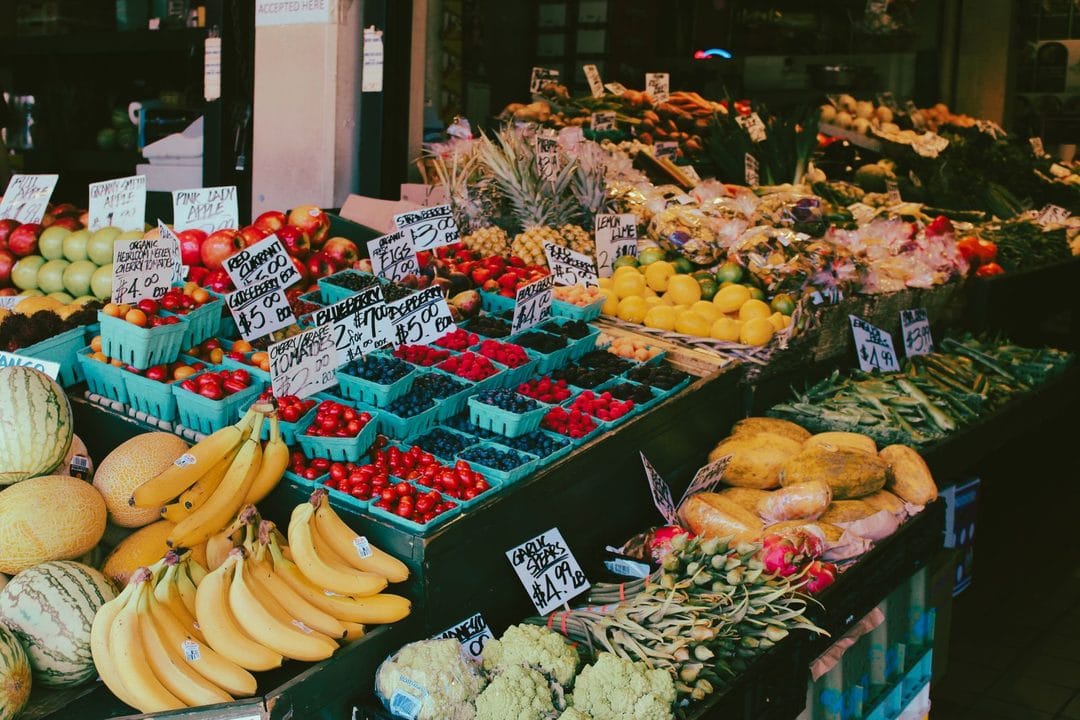
Stand at a Saturday farmers market table in early August and the first thing you notice isn't the price tag — it's the smell. Ripe peaches, dirt still clinging to fingerling potatoes, basil that hasn't been refrigerated into flavorlessness. Somewhere between the tomato stand and the honey vendor, though, sits a harder question: is any of this actually better for the planet than grabbing the same items from the produce aisle at Kroger? National Farmers Market Week, which USDA and the Farmers Market Coalition run every year during the first full week of August — August 2 through 8 in 2026 — is built on the assumption that the answer is yes. The real picture turns out to be more interesting than the marketing.
A USDA Proclamation That Turned Into a Movement
USDA first proclaimed National Farmers Market Week back in 1999, a modest bureaucratic gesture that mostly went unnoticed outside agriculture circles. The Farmers Market Coalition, a nonprofit that represents market managers and vendors across the country, picked up the idea and built an actual campaign around it, with toolkits, social pushes, and local proclamations from mayors and governors. This year, Agriculture Secretary Brooke Rollins is headlining the Great American Farmers Market on the National Mall in Washington, D.C., timed to the same week. None of that changes what happens at your local market on an ordinary Tuesday afternoon, though. What it does is give market managers a reason to book extra vendors, run promotions, and — if you're paying attention — offer better deals than you'll see the rest of the summer.
The Food-Mile Argument Isn't as Clean as It Sounds
So does driving ten minutes to a folding table under a pop-up tent actually beat a truck delivering pallets to a supermarket loading dock?
Sometimes. A tomato picked that morning ten miles away and driven straight to a folding table has a genuinely smaller transportation footprint than one that traveled from a distribution center two states over. But "local" isn't a protected term the way "organic" is — there's no federal rule stopping a vendor from buying wholesale produce at a regional terminal market and reselling it as their own harvest, and market managers rarely have the staff to verify every farm claim. The Farmers Market Coalition has pushed for stronger vendor verification for exactly this reason, and some markets now require growers to post their farm address at the stall. If a table is selling avocados or pineapples at an Ohio market in August, ask where they actually grew. Honest vendors will tell you straight, and the answer is almost never "here."
Where the Packaging Actually Disappears
Bring your own bags and the difference shows up fast — not in some abstract global metric, but in your own kitchen trash can by Sunday night. Grocery store produce arrives wrapped in more plastic than most shoppers register: clamshells for berries, shrink-wrap on cucumbers, mesh bags for citrus that most cities can't recycle curbside. Farmers market vendors are used to loose produce going straight into a canvas tote or a cardboard flat you hand back at the end. Skip the pre-washed bagged greens this week — a loose head of lettuce costs less than the bagged version and holds up longer in the crisper drawer, since it hasn't been through a chlorine rinse and sealed in a plastic sleeve.
Double Up Food Bucks: The Sustainability Angle Nobody Markets
The program with the biggest actual reach during National Farmers Market Week doesn't get much airtime outside food-policy circles: Double Up Food Bucks. It's a nutrition incentive program that started in Michigan and has since spread, under different local names, to dozens of states — Double Up Heartland, Double Up Colorado, Double Up TN, Double Up NYS. The mechanics are simple. A SNAP recipient swipes an EBT card at a market's info booth, and the market matches the amount dollar-for-dollar in tokens good only for fresh fruit and vegetables, usually capped somewhere between $20 and $50 a day depending on the state and the program funding that year. Sustainability conversations tend to fixate on emissions and packaging and skip over access entirely, and that misses half the point. A food system only holds together long-term if the people buying into it can actually afford to.
What to Actually Buy This Week (and What to Skip)
Buy the stone fruit and the tomatoes without hesitation. Peaches, plums, and heirloom tomatoes are at their peak across most of the country right now, and a pint of cherry tomatoes running $5 or $6 at a market table will taste like a different vegetable entirely compared with the $3.49 clamshell at Trader Joe's. Buy sweet corn only if the vendor picked it that morning, because corn sugar starts converting to starch within hours of harvest — supermarket corn that spent two days in transit was never going to compete anyway. Skip anything a vendor can't answer basic questions about: where it grew, when it was picked, whether it's their own farm or a resale. And don't assume every market beats Whole Foods or Kroger on price; some boutique urban markets charge a premium for produce you'd find cheaper at a roadside stand twenty minutes further out, so a quick price check across two stalls before you fill a bag is worth the five minutes it costs.
A few things worth prioritizing during the first week of August, roughly in order of how fast they lose quality after picking:
- Sweet corn and berries — both start losing sugar and flavor within a day, so buy only what you'll eat by midweek.
- Heirloom tomatoes, which almost never travel well and rarely show up intact at chain grocery stores.
- Stone fruit — peaches, plums, nectarines — sold slightly underripe so you control when it's ready.
- Cut flowers, if the budget allows; they're one of the few things at a market that's genuinely cheaper than a Trader Joe's bouquet and lasts nearly as long.
- Herbs sold with roots still attached, which you can plant in a pot and keep harvesting for weeks — something no supermarket clamshell offers.
Money That Actually Stays Close to Home
Buying direct from a grower cuts out several layers a supermarket supply chain keeps in place — a distributor, a broker, sometimes a co-packer — so more of what you spend lands directly with the person who grew the food. That's a different kind of sustainability than emissions math, but it's just as real. A small farm that sells out its stall on a Saturday has the cash flow to plant a bigger fall crop, hire seasonal help for the harvest, or finally fix the irrigation line that's been leaking since June. It's the difference between supporting agriculture as an abstract idea and supporting one specific farm you can find again next week, at the same tent, run by the same person who remembers what you bought last time.
Farmers markets have limits worth naming
They don't run year-round in most climates, they're rarely open past early afternoon, and a family doing a full week's grocery shop still needs a supermarket for pantry staples, dairy, and meat a market stand can't cover. Treating a Saturday market as a full replacement for Kroger or Whole Foods sets most households up to give up within a month. Treating it as the place where the produce and flowers come from, with the rest of the list handled elsewhere, is the version that actually sticks.
National Farmers Market Week doesn't need a proclamation to make the case for showing up on a Saturday morning. Show up anyway, ask the vendor how the tomatoes did this year, and buy the ugly ones — they're usually the sweetest, and nobody else is going to take them home.