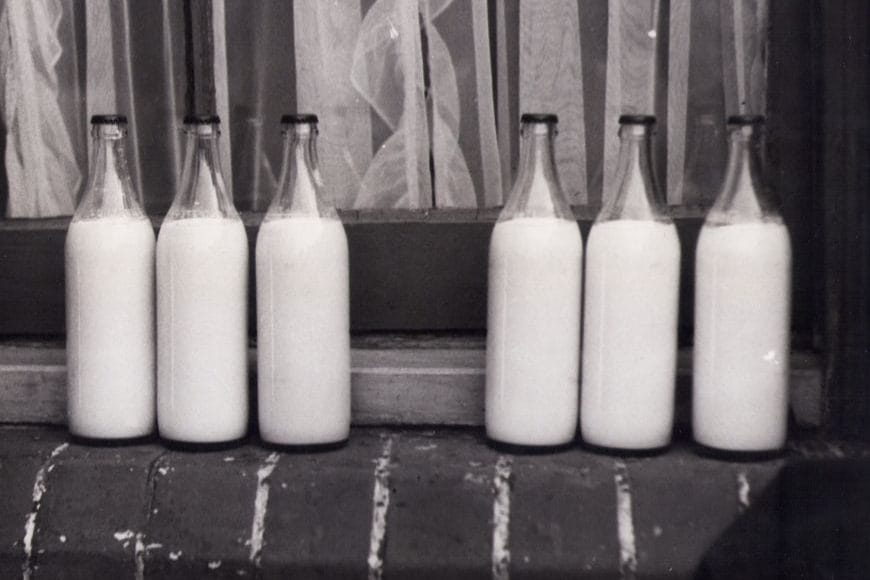
The clink comes before sunrise, usually somewhere around 5:30, glass against glass on a wooden porch step still slick with dew. A cooler bag, not a truck with a horse anymore, but the sound is the same one your grandmother would have recognized instantly. Two quarts of whole milk, a dozen eggs nested in a paper carton, and a note scrawled on a chalkboard tag: "Thanks for reusing — see you Thursday." Home milk delivery, the thing everyone assumed died out somewhere around the Nixon administration, is quietly running routes again in a few hundred towns across the country, and this time it's built around glass, not nostalgia alone.
Why the Milk Truck Never Fully Disappeared
Dairies like Oberweis in Illinois never actually stopped delivering — the company has run glass-bottle routes out of North Aurora since 1927, through decades when everyone else switched to plastic jugs and supermarket shelves. What's changed is who's paying attention. South Mountain Creamery in Maryland now runs delivery routes to more than 6,000 households a week, and Trickling Springs Creamery in Pennsylvania rebuilt its entire route network after 2020, when people stuck at home rediscovered that someone could just bring the milk to them. None of these operations market themselves as an environmental statement first. They sell freshness — milk bottled within 48 hours of the cow, not the seven-to-ten days typical of a supermarket carton — and the plastic reduction shows up as a side effect that customers only mention after they've already signed up for the cream on top.
The Economics of a $3 Deposit
Here's the part that surprises people who assume "sustainable" automatically means "expensive." A glass quart of milk from a route dairy typically runs $4 to $5, against $3.50 to $4 for a name-brand plastic half-gallon at a regular grocery store — close enough that the price gap isn't the barrier people expect. The bottle deposit is usually $2 to $3, refunded in full when you leave the empty out for pickup, which means the container itself costs you nothing once you're a few weeks into the routine. You're not buying a lifestyle upgrade so much as trading a habit: rinse the bottle, set it on the step, repeat. The dairy washes and refills the same glass an average of 20 to 30 times before it's retired, which is roughly 20 to 30 plastic jugs that never got manufactured, shipped, and landfilled on your behalf. Delivery itself typically adds another $2 to $4 a week on most routes, sometimes waived above a minimum order, which is the one line item people forget to budget for when they're comparing sticker prices at the dairy case. Weigh that against a supermarket trip you'd have made anyway, though, and the real marginal cost of switching often lands closer to a cup of coffee a week than a genuine lifestyle expense.
What's Actually in the Cooler Now
Milk is the anchor product, but it's rarely the whole order anymore. Most route dairies have quietly turned themselves into small grocery delivery operations built around the same glass-and-return logic. Eggs come in reusable cartons instead of foam or pulp. Orange juice and heavy cream ship in the same deposit-bottle system as milk. A handful of routes, including Oberweis and a growing list of independent creameries in New England, now add local bread, seasonal produce boxes, and even coffee beans refilled into the customer's own jar left out with the empties. None of it is marketed as a subscription box in the Silicon Valley sense — there's no app notification, no algorithm suggesting add-ons. You call, or more often now you fill out a form on a website that looks like it hasn't been redesigned since 2014, and a person writes your order on a clipboard. Some routes still take a paper check left under the doormat on the first of the month, which tells you almost everything about how far this corner of the food system sits from the rest of modern retail.
The Plastic Math Nobody Bothers to Do
A family of four drinking two gallons of milk a week goes through roughly 104 plastic jugs a year.
Most of those jugs are recyclable in theory, and maybe half actually get recycled in practice, depending on the county and how clean the container was when it hit the bin. A refillable glass bottle, by contrast, doesn't enter the recycling stream at all until it's cracked or chipped beyond use, which for a well-run route dairy is a small minority of the fleet each year. It's not a dramatic number on its own. Multiply it across a delivery route with a few thousand households, though, and a single Maryland creamery is quietly keeping something like half a million plastic containers out of circulation annually — without a press release, a hashtag, or a sustainability report to say so.
Finding a Route Near You
Coverage is real but patchy, concentrated in the Midwest, the mid-Atlantic, and pockets of New England and the Pacific Northwest — you're more likely to find a route if you live within reach of a working dairy region than in a city built entirely around supermarket logistics.
- Search "glass milk delivery" plus your county name rather than your city — most routes are organized around rural service areas, not municipal boundaries
- Check whether a nearby creamery or dairy has its own delivery page before assuming a big-name service is your only option
- Ask at a local farmers market stall — dairy vendors often run delivery on the side and don't advertise it well
- Expect a minimum order size on some routes, usually two to three items a week, and a delivery window rather than an exact hour
- and if nothing turns up within thirty miles, a handful of routes now ship insulated coolers by mail, which defeats some of the local-food logic but keeps the glass-and-return part intact
The Catch Nobody Mentions
This isn't a frictionless upgrade, and pretending otherwise does the whole idea a disservice. You have to remember to put the bottles out, which sounds trivial until you've forgotten twice and are now storing eight empty quarts under the sink. Delivery days are fixed, not on-demand, so a milk emergency at 9 p.m. on a Tuesday still means a trip to the store. Prices, while closer to retail than people expect, aren't identical, and a family that goes through milk fast enough to buy in bulk at a warehouse club will likely pay somewhat more per gallon on a route. And coverage gaps are real — plenty of readers in this very audience live in places where the nearest glass-bottle route is simply too far to be practical, no matter how appealing the idea sounds on a Sunday morning. A friend who switched in Frederick County last spring put it more bluntly: the milk is genuinely better, but the discipline of setting an empty bottle out every single week is its own small chore, one more thing added to a morning that was already full before the cooler bag ever showed up.
None of that cancels out what the model gets right. It's just worth knowing before the cooler bag shows up expecting a bottle that isn't there yet.