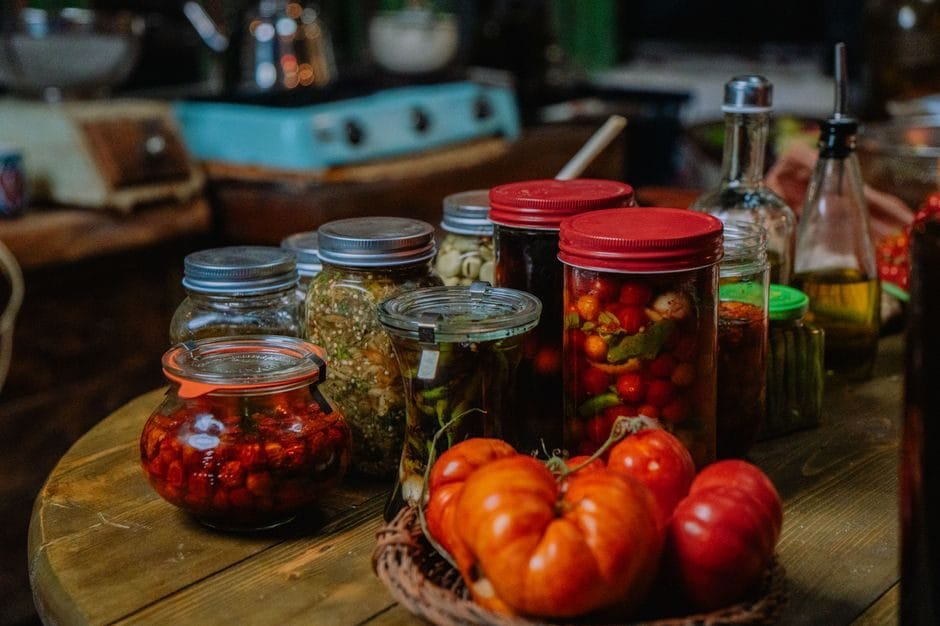
Somewhere in a farmhouse kitchen last August, a woman named Doris Kowalski lined up forty jars of tomatoes on her counter, screwed on the lids, and lowered them into a pot of boiling water her mother had used for the same job forty years earlier. Her chest freezer was already packed solid with last winter's soup and this spring's strawberries. Her garden, meanwhile, had produced more tomatoes than her family of four could possibly eat before the fruit split and turned to mush on the vine, and six weeks of watering, weeding, and staking plants felt like too much effort to watch rot on a compost pile. So she did what people did before overnight grocery delivery and a spare freezer in the garage solved every food-storage problem in America: she canned it, jar by jar, the same way her mother had.
That instinct — don't let it go to waste, put it up for winter — used to be ordinary common sense in most American kitchens. Somewhere between the rise of the supermarket and the rise of the same-day delivery app, it turned into a curiosity, something grandmothers did while grandchildren watched from a step stool. It's coming back now, and not because of a nostalgia trend circulating on social media.
The Comeback Isn't Nostalgia — It's Math
The USDA estimates that 30 to 40 percent of the food supply in the United States goes to waste every year, and the average household throws out roughly 325 pounds of food annually — about $1,500 worth, tossed into the trash instead of onto a plate. Most of that loss happens at exactly the moment Doris Kowalski hit in her kitchen: a garden bed, a farmers market haul, or a grocery store sale that hands you more food than anyone can realistically eat before it turns. A freezer helps, but freezers fill up, lose power during storms, and cost electricity every single day a jar of preserved tomatoes doesn't. And the industry backs up what individual households are rediscovering — the global market for canning jars was worth $4.2 billion in 2025 and is projected to reach $6.8 billion by 2034, growing at roughly 5.5 percent a year, with North America alone accounting for $1.48 billion of that spending. People aren't buying that many jars just to look at them on a shelf. A store-bought can of diced tomatoes now runs anywhere from about 96 cents for a store-brand can up to $1.57 for a name brand like Contadina, and that adds up fast across a pantry that needs forty jars to get one family through winter — home-canned tomatoes end up costing closer to the price of the produce itself once the jars, which get reused for years, are already paid for.
Skip the freezer-only advice that most modern sustainability guides default to. Canning beats freezing for anyone whose chest freezer is already stuffed with last winter's soup, and it beats letting three zucchini plants bury the kitchen counter in produce nobody has a plan for. That's not a hedge — it's the better call the moment a garden or a market haul hands you more than a week's worth of dinners in one afternoon.
Grandma's Recipe Needs One Update
Here's the part that trips up anyone trying to recreate a grandmother's tomato recipe exactly as written on a 1974 index card: the acid level in modern tomato varieties has shifted enough that the USDA now recommends acidifying every batch, regardless of how sweet or tart the fruit tastes on its own. Add 2 tablespoons of bottled lemon juice or ½ teaspoon of citric acid per quart jar — 1 tablespoon or ¼ teaspoon per pint — because newer varieties, along with over-ripe fruit or tomatoes from frost-damaged vines, can creep above the pH 4.6 line where Clostridium botulinum, the bacteria behind botulism, is able to survive a boiling-water bath. Bottled lemon juice only, never fresh-squeezed, since bottled juice carries a standardized acidity that fresh lemons can't guarantee from one fruit to the next. It's a small step, it takes about ten seconds per jar, and skipping it is the single most common mistake in family recipes passed down before this research existed.
That one detail carries the whole safety story in miniature. High-acid foods — fruit, jam, pickles, anything with enough added vinegar or citrus — can go through a simple boiling-water bath. Low-acid foods, meaning most vegetables, meat, and poultry, need a pressure canner that reaches temperatures water alone never hits, because boiling water simply doesn't get hot enough to kill Clostridium botulinum inside a sealed, oxygen-free jar. The National Center for Home Food Preservation is blunt about which shortcuts don't work at all: no open-kettle canning, no processing in a conventional oven, microwave, or dishwasher, no "canning powder" as a substitute for real heat processing. Use a research-tested recipe dated 2009 or later from a Cooperative Extension office, the USDA, or the NCHFP itself — a recipe copied from a chain email or an old church cookbook might use processing times the current science no longer backs. Altitude changes the math too: a recipe's stated processing time is accurate as written only below 1,000 feet, and the NCHFP's own chart calls for an extra 5 minutes in a boiling-water bath between 1,001 and 3,000 feet of elevation, climbing to 10 minutes between 3,001 and 6,000 feet, because water simply boils at a lower temperature the higher up a kitchen sits.
What Actually Goes in the Pot This Week
Late July doesn't wait around.
Tomatoes are cheap and overflowing at farm stands this time of year, peaches and other stone fruit are hitting their peak, corn is coming in by the bushel, and blueberries are still around before blackberries take over in August. Whole or crushed tomatoes, peach halves in a light syrup, and a jar of dilly beans are the three easiest first projects for anyone who has never run a canner before, and none of them require anything beyond a stockpot you probably already own.
Start there and skip anything that needs a pressure canner on the first attempt. Save low-acid vegetables and meats for once you've run a boiling-water batch or two and read through a pressure canner's manual — twice, not once.
The Starter Kit, Priced Honestly
A 12-pack of Ball pint jars runs somewhere between $12 and $18 depending on the retailer — Ace Hardware has listed them around $17.99, while farm-supply chains like Blain Farm & Fleet have carried the same pack closer to $11.99. Buy the plain glass, not the tinted heritage-collection jars in vintage blue: the few extra dollars buy a prettier shelf, not better food underneath the lid. Jars last for years as long as the glass doesn't chip, so that cost stretches across many seasons; only the flat metal lids need replacing each time, and the screw bands can be reused more or less forever. A basic boiling-water setup needs nothing more exotic than a large stockpot, a rack to keep jars off the bottom, and a jar lifter, all of which add up to well under $30 combined.
Pressure canning is the bigger investment, and the one worth waiting on. Presto's 23-quart aluminum canner, the model most home canners default to, has sold anywhere from $90 to $130 on Amazon over the past several years depending on the sale. Buy one only after canning has proven itself as a habit rather than a one-summer experiment — a neighbor who already owns a canner, or a local Extension office that lends equipment out, covers the low-acid side of things without the upfront cost.
Making It Stick Past One Summer
The households that keep canning past their first season tend to do one thing differently: they can in small batches, often, rather than staging one marathon weekend that burns everyone out by Sunday afternoon. Seven quarts of tomatoes on a Saturday morning fits around a normal week in a way a twelve-hour canning day never will, and a small batch is far easier to repeat every couple of weeks through August and into September, right up until the first frost ends the tomato harvest for good.
Store finished jars somewhere dark and cool — a basement shelf beats a cabinet mounted above a warm stove — and check every seal before using anything from the pantry. A lid that flexes when pressed, a jar with cloudy liquid, foam that spurts out when opened, or any off smell means the jar gets thrown out untasted, not sampled to check whether it's really gone bad.
Doris Kowalski's forty jars will feed her family through a winter without a single trip down the canned-tomato aisle. Every one of them cost her a garden hose, a stove burner, and an afternoon — not a delivery fee, not a plastic-lined can, not a truck idling outside a distribution warehouse somewhere. That's the real case for pulling a jar rack back out of the basement this year, before the tomatoes on the counter go soft.