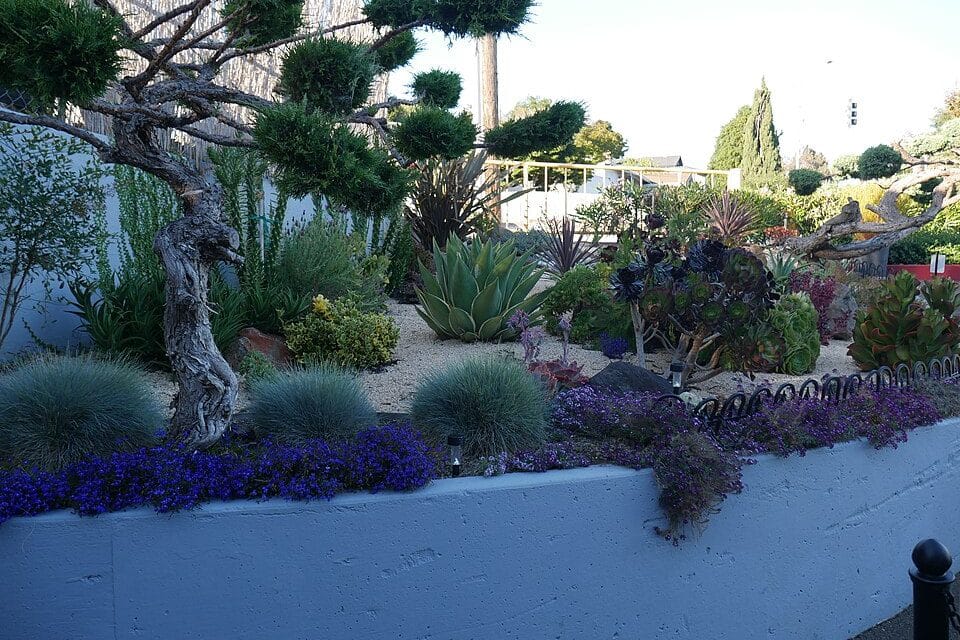
Your Lawn Is Still Drinking Like It's 1975
Somewhere around the middle of last century, the American front lawn turned into a small, unspoken competition — a strip of Kentucky bluegrass mowed into stripes, watered on a schedule, fed with whatever the hardware store was pushing that spring. Nobody questioned it much. Water was cheap, sprinklers were new and exciting, and a green lawn signaled that the household inside was keeping up. Fifty years later, the lawn is still there, still thirsty, and in a lot of the country it no longer makes much sense. Denver Water actually coined the word "xeriscape" back in 1981, stitching together the Greek "xeros" (dry) with "landscape," because the utility needed a shorthand for gardens that survive without a hose running every other evening. The idea is older than the word — it's really just planting things that already know how to live where you live.
That's the pitch of this piece: swap some or all of a thirsty lawn for native and drought-tolerant plants, and stop fighting the climate every July. It's not an all-or-nothing move, and it's not a weekend project if you're doing a full yard. But it pays for itself faster than most home upgrades, and unlike a heat pump or solar panels, you can start with a single 200-square-foot bed this weekend for less than a tank of gas.
The Water Math Nobody Actually Runs
Here's a number that surprises most homeowners the first time they see it: one inch of water on 1,000 square feet of lawn takes roughly 623 gallons. A typical suburban lawn wanting an inch a week through a hot summer is pulling somewhere between 1,500 and 3,000 gallons weekly, depending on lot size and how leaky the sprinkler heads are. The EPA's WaterSense program puts outdoor water use at about 30% of the average American household's total consumption, and in the driest states that share climbs well past half. Multiply that out over a June-through-September stretch and a single lawn can account for 40,000 to 60,000 gallons of municipal water — water that, in places like Phoenix or Las Vegas, is pulled from a Colorado River system currently running below the levels anyone planned for in the 1960s.
None of that shows up clearly on a monthly bill, which is part of the problem. Most utilities bundle water into a flat tier structure until usage crosses a threshold, so the cost of a thirsty lawn hides until August, when the bill jumps $60 to $150 depending on the region and rate structure. Cut the irrigated turf area by half and that overage mostly disappears — not eventually, the very next billing cycle.
What Actually Grows Here Without Babying
Native plants aren't a compromise choice; picked well, they outperform ornamental non-natives on every measure that matters for a yard that has to survive a Tuesday you forgot to water. They evolved alongside the local rainfall pattern, the local soil, and the local pollinators, so once established — usually one to two growing seasons — they need supplemental water only during genuine drought stretches, not on a sprinkler timer. The regional picks below aren't the only options, but they're widely available at independent nurseries and mail-order specialists like High Country Gardens and Prairie Moon Nursery, and they've held up in real yards, not just test plots.
- Desert Southwest (AZ, NV, western TX, southern NM): Texas sage (Leucophyllum frutescens), desert marigold, blackfoot daisy, and any of the smaller agave species for structure
- Great Plains and Midwest: buffalograss or blue grama as lawn substitutes, plus purple coneflower and black-eyed Susan for color — prairie dropseed if you want movement in the wind
- Northeast: little bluestem, switchgrass, New England aster, and foamflower for shadier corners
- Southeast: pink muhly grass, coreopsis, and yaupon holly, which tolerates both drought and the region's occasional flooding downpour, which is more of a factor there than people expect
Buffalograss deserves its own mention because it's the closest thing to a drop-in lawn replacement that still looks and feels like a lawn — it stays low, takes light foot traffic, and needs roughly a quarter of the water that Kentucky bluegrass demands once established. It won't hold up to a daily backyard football game the way fescue does, and it goes tan-brown in winter dormancy in a way some homeowners associations still don't love. That tradeoff is worth knowing before you commit an entire front yard to it.
Sheet Mulching Beats Sod Cutting for Most People
Sheet mulching is slower and it works.
There are two honest ways to remove existing turf, and the internet tends to oversell the fast one. Sod cutting — renting a machine and physically slicing the grass layer off — clears a yard in an afternoon but costs $80 to $150 a day in equipment rental, strips topsoil along with the grass, and leaves you disposing of heavy, dirt-laden sod rolls that most municipal yard-waste pickups won't take.
Lay cardboard or several layers of newspaper directly over the mowed-down grass, wet it thoroughly, then cover with four to six inches of mulch or compost. The grass underneath smothers and breaks down into the soil over six to ten weeks instead of leaving the yard, which means you're building soil rather than removing it. Bulk mulch runs $30 to $50 per cubic yard delivered in most metro areas, and a cubic yard covers roughly 100 square feet at three inches deep — cheaper than renting a sod cutter for most yards under a quarter acre, and considerably less physical work spread over a weekend or two instead of one grueling day. Home Depot and Lowe's both sell bagged mulch at around $4 to $5 for two cubic feet, which works fine for a single small bed but stops making financial sense the moment a project crosses a few hundred square feet — that's when a bulk delivery from a local landscape supplier earns back its cost.
Rebates Make the Math Even Better
Turf removal rebates aren't a fringe program anymore — dozens of Western water utilities now pay homeowners to rip out lawn. The Southern Nevada Water Authority's Water Smart Landscapes rebate has paid out $3 per square foot of converted turf for years running, capped per property but still enough to cover a meaningful share of materials on an average front yard. The Metropolitan Water District of Southern California runs a similar program through member agencies, typically in the $2-per-square-foot range, and Denver Water — the utility that started this whole conversation in 1981 — still offers its own rebate structure for xeriscape conversions within its service area. Check your municipal water utility's website before buying a single plant; a lot of these programs require before-and-after photos and pre-approval, and skipping that step means forfeiting money that's sitting there for the taking.
Drip Irrigation, Not No Irrigation
A common misconception trips people up here: drought-tolerant doesn't mean zero water, ever. New plantings need regular water for their first one to two growing seasons while roots establish, and even mature native beds appreciate deep, infrequent watering during genuine drought extremes rather than the daily light sprinkle that spray-head lawn systems default to. Drip irrigation — a Rain Bird or Netafim kit runs $50 to $150 for a mid-size bed, plus a $30 battery-powered timer — delivers water directly to root zones with far less evaporation loss than overhead spray, and it's the single upgrade most likely to make a new native bed survive its first brutal August.
Skip the drip line on a whim and even the toughest native planting can struggle through an unusually harsh first summer, so don't treat "low-water" as a reason to skip irrigation infrastructure entirely during establishment.
What Two Summers In Actually Looks Like
The first summer after a conversion is the one that tests patience — most native perennials put their energy into roots rather than top growth in year one, so a new bed can look sparse and slightly ragged while established turf next door stays uniformly green. That's normal, not a sign anything failed. By the second spring, root systems that reach three to six feet deep for prairie natives like purple coneflower and little bluestem are doing work no lawn ever managed: pulling moisture from soil layers a sprinkler system never reaches, which is exactly why the watering schedule drops off so sharply after establishment. Weeding stays heavier than advertised through that first year too, since bare mulch between young plants is an open invitation for whatever blows in on the wind, and skipping a spring weeding pass because "it's drought-tolerant now" is how a promising bed turns into a patch of crabgrass with a few surviving coneflowers poking through. Most homeowners report the real drop in maintenance time — mowing, edging, fertilizing, the whole Saturday-morning routine — showing up in year two, once root systems are established and a two-to-three-inch mulch layer is doing its job of suppressing new weed seed. A yard that took four hours of yard work a week during peak lawn season can realistically drop to under an hour once the native beds mature, and that's before counting the water bill.
Where Grass Still Earns Its Keep
None of this argues for tearing out every blade of grass on the property, and any contractor who tells you otherwise is selling something. Play areas for kids and dogs, and any patch that genuinely gets used for lounging or games, still function better as turf than as a bed of penstemon nobody's allowed to walk on. The better strategy — and the one municipal rebate programs increasingly reward — is converting the purely decorative front-yard turf that exists mostly to be looked at from the street, while keeping a smaller, right-sized lawn where people and pets actually spend time. A 2,000-square-foot front lawn that nobody sets foot on all summer is a much better candidate for conversion than the 400-square-foot backyard patch where the dog does laps every morning.
Start with the strip along the driveway or the slope that's always been a pain to mow evenly. Get one bed established, watch it come back strong next spring with almost no attention, and the rest of the yard tends to follow on its own schedule.